Public Safety Canada's 2026 to 2027 Departmental Plan
Contents:
- At a glance
- From the Ministers
- Plans to deliver on Core Responsibilities and internal services
- Department-wide Considerations
- Planned Spending and Human Resources
- Supplementary Information Tables
- Federal Tax Expenditures
- Corporate Information
- Definitions
At a glance
This departmental plan details Public Safety Canada's priorities, plans, and associated costs for the upcoming three fiscal years.
These plans align with mission statements 1 and 5 outlined in the Prime Minister's Mandate Letter, as well as Public Safety Canada's Vision, mission, raison d'être and operating context.
Key Priorities
Public Safety Canada identified the following key priorities for 2026 to 2027:
- continue joint efforts with the United States and domestic partners to ensure border security and integrity while building Canada's strategic autonomy;
- improve awareness, understanding, and the ability of the Government of Canada to detect and respond to national security threats;
- enhance law enforcement capacity and capability to fight crime to protect Canadian communities; and,
- advance initiatives focused on enhancing coordination of and response to emergencies, in collaboration with federal, provincial, territorial, and Indigenous partners and other stakeholders.
Comprehensive Expenditure Review
The government is committed to restraining the growth of day-to-day operational spending to make investments that will grow the economy and benefit Canadians.
As part of meeting this commitment, Public Safety Canada is planning the following spending reductions:
- FY 2026 to 2027: $15,322,513
- FY 2027 to 2028: $20,430,685
- FY 2028 to 2029: $30,645,028
It is anticipated that these spending reductions will involve a decrease of approximately 377 full-time equivalents (FTEs) by 2028 to 2029. The FTE reductions shown here include the implementation of measures to manage additional budgetary pressures and the nonrenewal of sunsetting programs, in addition to those arising from the Comprehensive Review Exercise.
Public Safety Canada will achieve these reductions by doing the following:
- Organizational Modernization and Efficiencies: Streamline leadership by reducing executive and administrative roles, consolidate internal functions to eliminate duplication and improve service delivery, discontinue low-impact services, and leverage technology and AI to automate tasks, reduce software licensing, and achieve cost savings.
- Reorienting Internal Emergency Management Functions: Refocusing on core federal emergency management responsibilities through a modernized organizational structure that will address fragmented functions, reduce inefficiencies, and enable sustained attention to critical priorities such as national readiness and response capacity.
The figures in this departmental plan reflect these reductions.
Highlights for Public Safety Canada in 2026 to 2027
In 2026 to 2027, total planned spending (including internal services) for Public Safety Canada is $2,252,844,028 and total planned full-time equivalent staff (including internal services) is 1,600. For complete information on Public Safety Canada's total planned spending and human resources, read the Planned Spending and Human Resources section of the full plan.
Summary of Planned Results
The following provides a summary of the results the department plans to achieve for 2026 to 2027 under its main areas of activity, called "Core Responsibilities".
Core Responsibility 1: National Security
Departmental Result
- National security threats are understood and reduced while maintaining public trust.
Planned spending: $44,164,669
Planned human resources: 227
Public Safety Canada will undertake initiatives to ensure that all members of Canadian society are equipped with the awareness, knowledge, and tools to respond to threats when they happen, and ensure that the right national mechanisms are in place to prevent and address these threats by:
- leveraging legislation, and domestic and international partnerships, to develop and implement national strategies to ensure coordinated and effective whole-of-government response to evolving national security threats; and,
- providing policy leadership and support to Portfolio agencies in our work to address national security threats.
More information about National Security can be found in the full plan.
Core Responsibility 2: Community Safety
Departmental Results
- Canadian Communities are safe.
- Community safety practices are strengthened.
- Crime is prevented and addressed in populations/communities most at-risk.
Planned spending: $938,754,775
Planned human resources: 517
Public Safety Canada will undertake initiatives to improve community safety, ensure community practices are strengthened and that public safety institutions can deliver effective and accountable services to all Canadians, including those in vulnerable and at-risk populations by:
- securing Canada's borders and reinforcing Canada's law enforcement (e.g., security and intelligence) agencies to ensure that Canada has an integrated approach to address smuggling of people, drugs, firearms, and to tackle organized crime, including transnational organized crime;
- supporting whole-of-government efforts to address fraud and money-laundering and financial crime to protect Canada's economy; and,
- supporting efforts, strategies, and programs to ensure all Canadian communities are safe from crime.
More information about Community Safety can be found in the full plan.
Core Responsibility 3: Emergency Management
Departmental Result
- Canada can effectively mitigate, prepare for, respond to and recover from all-hazards events.
Planned spending: $1,182,927,785
Planned human resources: 310
Public Safety Canada will undertake initiatives to ensure that Canada is well-positioned to effectively mitigate, prepare for, respond to and recover from all-hazards events by:
- developing new mechanisms to improve long-term response capacity and effectiveness to address the impacts of, and reduce, all-hazards emergencies;
- continuing to implement existing mechanisms to support provinces and territories in addressing financial impacts of disasters; and,
- further bolstering emergency response capacity in the short term via continued development of a civilian response capacity.
More information about Emergency Management can be found in the full plan.
From the Ministers

The Honourable Eleanor Olszewski P.C., K.C., M.P.
Minister of Emergency Management and Community Resilience and Minister responsible for Prairies Economic Development Canada

The Honourable Gary Anandasangaree, P.C., K.C., M.P.
Minister of Public Safety
We are pleased to share Public Safety Canada's 2026 to 2027 Departmental Plan. Our unwavering commitment to protecting Canadians remains strong, as we navigate an increasingly complex and evolving landscape. This report outlines key initiatives and priorities, and we encourage all Canadians to explore its contents.
Firstly, real, sustained progress in the national security space requires meaningful engagement and mobilization of the communities we serve - to understand their views and leverage their expertise. To address the evolving security landscape, build our national security sovereignty and further establish ourselves as a valuable security-intelligence partner, Canada must also develop and enhance its legislative authorities and operational capacity to account for 21st century threats and a changing world order. To this end, the Department will act quickly and decisively with all partners to deliver and implement national security priorities to address threats related to critical infrastructure, cybersecurity, espionage, terrorism and violent extremism, radicalization to violence, serious and organized crime, border security, transnational repression, and foreign information manipulation and interference, and to strengthen Canada's strategic autonomy. The Department will also help to implement tools to fight modern national security threats, including the implementation of Canada's National Cyber Security Strategy, and continued support to the Office of the National Counter Foreign Interference Coordinator.
Secondly, securing our borders and communities, and reinforcing law enforcement, are front-and-centre in the Prime Minister's mandate letter. Maintaining a strong and secure border is key to ensuring Canada's sovereignty and keeping Canadians safe. Strategic investments in personnel, infrastructure, and surveillance equipment will help to address human trafficking, and the smuggling of firearms, fentanyl, stolen vehicles, and other illegal contraband across our border. Public Safety Canada and the Fentanyl Czar, in collaboration with many sectors across Canada, will work together to combat drug crime in line with the Canadian Drugs and Substances Strategy. The Department will also continue to finalize the implementation of the Assault-Style Firearms Compensation Program, removing assault-style firearms from circulation and permanently destroying these weapons that have no place in our communities. A further priority this year will be to strengthen federal policing and set the path for the future of contract policing beyond 2032, while continuing to advance reforms to the First Nations and Inuit Policing Program.
Thirdly, we know that Canada is at a point of inflection, with a unique opportunity to chart a renewed path for national and economic security, especially as it relates to our relationship with the United States and other allies. Along with continued implementation of Canada's Border Plan, we will enhance our engagement with international counterparts in the Five Eyes, G7, Europe and beyond, to secure new security relationships and advance concrete actions on shared priorities. We will also advance commitments outlined in G7 Leaders' statements on countering migrant smuggling and transnational repression and build on Canada's hosting of the G7 Interior Ministers' Meeting, which took place in Fall 2025, to continue discussions and identify concrete joint actions to address common threats and challenges facing the G7 in the security space.
Finally, as the frequency and severity of emergencies such as environmental events, major conflicts, cyber threats, pandemics, and other subsequent disruptions continue to increase, strengthening Canada's emergency management capacity is critical. In 2026 to 2027, Public Safety Canada will work with the emergency management community to explore the implementation of national exercises for emergencies. In the short-to-medium term, the Department will work with partners to renew Canada's Emergency Management Strategy, critical national public alert infrastructure, and civilian response capacity, as well as support provinces and territories by enabling crisis funding and fostering individual resilience.
Public Safety Canada will play its part in ushering in a new age of leadership, resilience, and trust across Canada. We will do so in collaboration with the communities we serve, ensuring that all Canadians feel safe and secure in their day to day lives. We invite all Canadians to read and share this report. The 2026 to 2027 Departmental Plan reflects Public Safety Canada's comprehensive agenda for the year ahead and offers valuable insights into our collective efforts to keep Canada safe.
The Honourable Gary Anandasangaree, P.C., K.C., M.P., Minister of Public Safety
The Honourable Eleanor Olszewski, P.C., K.C., M.P., Minister of Emergency Management and Community Resilience and Minister responsible for Prairies Economic Development Canada
Plans to deliver on Core Responsibilities and internal services
Core Responsibilities and internal services
- Core Responsibility 1: National Security
- Core Responsibility 2: Community Safety
- Core Responsibility 3: Emergency Management
- Internal services
Core Responsibility 1: National Security
In this section
- Description
- Quality of Life Impacts
- Indicators, Results and Targets
- Plans to achieve results
- Planned resources to achieve results
- Program Inventory
- Summary of changes to reporting framework since last year
Description
Public Safety Canada develops policy, legislation and programs to support Canada's capacity to respond to a range of national security threats directed against Canadians, our critical infrastructure and our cyber systems while advancing national counter terrorism efforts.
Quality of Life Impacts
This core responsibility contributes to the "Good Governance" domain of the Quality of Life Framework for Canada related to "personal safety", "perceptions of neighborhood safety", "confidence in institutions", and "misinformation/trust in media" through all the activities mentioned in the core responsibility description.
Indicators, Results and Targets
This section presents details on the department's indicators, the actual results from the three most recently reported fiscal years, the targets and target dates approved in 2026 to 2027 for National Security. Details are presented by departmental result.
Table 1 provides a summary of the target and actual results for each indicator associated with the results under National Security.
| Departmental Result Indicators | Targets | Date to achieve target | Actual Results |
|---|---|---|---|
| Canada's ranking on the Global Terrorism Index | ≥ 82 | March 31, 2027 |
|
| Percentage of the population who thinks that the Government of Canada respects individual rights and freedoms while ensuring the safety of Canadians | ≥ 70% | March 31, 2027 |
|
| Percentage of the population who thinks that the right mechanisms are in place to identify National Security threats in Canada | ≥ 60% | March 31, 2027 |
|
| Percentage of the population who thinks that the right mechanisms are in place to respond to national security threats in Canada | ≥ 60% | March 31, 2027 |
|
| Percentage of partners who indicate that Public Safety Canada provided effective policy leadership and operational coordination on national security issues | ≥ 75% | March 31, 2027 |
|
| Critical Infrastructure Resilience Score | ≥ 34.2 | March 31, 2027 |
|
| Percentage of partners who indicate that Public Safety Canada provides effective leadership in advancing Canada's cyber security interests | ≥ 80% | March 31, 2027 |
|
| Canada's ranking in the National Cyber Security IndexFootnote 17 | ≥ Ranked 30thFootnote 18 | March 31, 2027 |
|
Additional information on the detailed results and performance information for Public Safety Canada's Program Inventory is available on GC InfoBase.
Plans to achieve results
The following section describes the planned results for National Security in 2026 to 2027.
Departmental Result:
National security threats are understood and reduced while maintaining public trust.
Results we plan to achieve
The national security threat landscape in Canada is evolving at an unprecedented rate, both in its complexity and interconnectedness. Evolving threats include, but are not limited to: transnational organized crime, espionage, malign foreign influence and interference, and terrorist and violent extremist activity; and threaten Canadian sovereignty, public security, economy, and well-being. Criminal organizations and state sponsored actors target government agencies, critical physical and cyber infrastructure and private sector companies to gain access to sensitive information and disrupt trust in the institutions Canadians rely on every day.
In 2026 to 2027, Public Safety Canada will undertake initiatives aimed at enhancing Canada's awareness of, and ability to respond to, evolving threats to national security, and strengthening Canada's resilience and strategic autonomy. Chief among these efforts will be the development and implementation of key whole-of-government policy strategies and commitments therein, such as the new National Cyber Security Strategy and the Prime Ministerial Directive on Transnational Crime and Border Security. The Department, alongside other Government of Canada partners and public safety Portfolio agencies, will also contribute to new and ongoing efforts to secure Canada's North and advance Arctic sovereignty, and will continue to coordinate whole-of-government efforts to combat foreign interference under the leadership of the National Counter Foreign Interference Coordinator, and will increase transparency of foreign influence activities through the establishment of the Office of the Foreign Influence Transparency Commissioner (FITCO) and a public registry of foreign influence activities.
The Department also recognizes that economic security is paramount to ensuring a safe and resilient Canada. As such, Public Safety Canada will advance efforts to improve Canada's capacity and capability to protect key economic security assets, including sensitive research and technologies, data and critical infrastructure, from potential threats. In addition to efforts to combat fraud and money laundering outlined under the Community Safety core responsibility, the Department will continue its critical role to provide advice to the Minister of Industry to inform decision-making regarding national and economic security risks related to foreign investments.
While we work to enhance Canada's autonomy, we also recognize that strategic and mutually beneficial partnerships are one of Canada's greatest strengths. As such, the Department will continue to develop and foster new and existing relationships with international multilateral organizations that share our interests, priorities, and challenges. In addition, the Department will expand and deepen collaboration with domestic Federal, Provincial, Territorial, and Indigenous partners, as well as public and private sectors, to increase information sharing and coordination, and ensure that they are equipped to address national security threats and threat actors.
Finally, a key part of the Department's mandate is to provide policy leadership and coordination support to Portfolio partners as we work together to tackle national security threats. These efforts, among others, will facilitate improved relationships with international and domestic partners and will allow the Government of Canada to more effectively protect Canadian security, sovereignty and secure our Northern borders, in line with the Prime Minister's mission statements 1 and 5, as well as the Prime Ministerial Directive on Transnational Crime and Border Security.
Planned resources to achieve results
Table 2 provides a summary of the planned spending and full-time equivalents required to achieve results.
| Resource | Planned |
|---|---|
| Spending | $44,164,669 |
| Full-time equivalents | 227 |
Complete financial and human resources information for the Public Safety Canada's Program Inventory is available on GC InfoBase.
Program Inventory
National Security is supported by the following programs:
- National Security Leadership
- Critical Infrastructure
- Cyber Security
Additional information related to the Program Inventory for National Security is available on the Results page on GC InfoBase.
Summary of changes to reporting framework since last year
No changes made to reporting framework since FY 2023 to 2024.
Core Responsibility 2: Community Safety
In this section
- Description
- Quality of Life Impacts
- Indicators, Results and Targets
- Plans to achieve results
- Planned resources to achieve results
- Program Inventory
- Summary of changes to reporting framework since last year
Description
Public Safety Canada provides national coordination to help Canadian communities and stakeholders respond to crime and build community resilience, promote the safety and security of Canadian communities and institutions, enhance the integrity of Canada's borders, and support the provision of policing services to Indigenous communities.
Quality of Life Impacts
This core responsibility contributes to the "Good Governance" domain of the Quality of Life Framework for Canada. More specifically, through the activities outlined in the core responsibility description and planned to achieve its objectives, this core responsibility contributes to the following indicators: "Confidence in institutions", "Indigenous self-determination", all but "household emergency preparedness" under the "Safety and Security" sub-domain, and all the indicators under the "Justice and Human Rights" sub-domain.
Indicators, Results and Targets
This section presents details on the department's indicators, the actual results from the three most recently reported fiscal years, the targets and target dates approved in 2026 to 2027 for Community Safety. Details are presented by departmental result.
Tables 3, 4, and 5 provide a summary of the target and actual results for each indicator associated with the results under Community Safety.
| Departmental Result Indicators | Targets | Date to achieve target | Actual Results |
|---|---|---|---|
| Percentage of stakeholders who report consulting Public Safety research or policy documents to inform their decision making | ≥ 70% | March 31, 2027 |
|
| Percentage of stakeholders who report good or very good results of projects funded through Public Safety Canada's Community Resilience Fund, in line with project objectives | ≥ 80% | March 31, 2027 |
|
| Number of new research products available to Canadians on radicalization to violence and efforts to prevent and counter it | ≥ 5Footnote 20 | March 31, 2027 |
|
| Number of Canadians who are aware of Government of Canada initiatives to reduce gun violence and new laws and regulations related to firearms in Canada | ≥ 2,000,000 | March 31, 2027 |
|
| Departmental Result Indicators | Targets | Date to achieve target | Actual Results |
|---|---|---|---|
| Crime Severity IndexFootnote 26 | ≤ 70.1 | March 31, 2027 |
|
| Police-reported crime rate per 100,000 population | ≤ 5,200 | March 31, 2027 |
|
| Percentage of Canadians who think that crime in their neighbourhood has decreasedFootnote 33 | ≥ 4% | March 31, 2027 |
|
| Percentage of Canadians who report driving a vehicle within two hours following cannabis useFootnote 34 | ≤ 20% | March 31, 2027 |
|
| Percentage of firearm-related homicides in CanadaFootnote 37 | ≤ 40% | March 31, 2027 |
|
| Departmental Result Indicators | Targets | Date to achieve target | Actual Results |
|---|---|---|---|
| Percentage of projects where participants experienced positive changes in risk and protective factors related to offending | ≥ 75% | March 31, 2027 |
|
| Percentage of programs targeting at-risk populations that achieve the intended participation rate | ≥ 75% | March 31, 2027 |
|
| Difference between police reported crime in First Nation communities and police reported crime in the rest of CanadaFootnote 42 | ≤12,000 | March 31, 2027 |
|
Additional information on the detailed results and performance information for Public Safety Canada's Program Inventory is available on GC InfoBase.
Plans to achieve results
The following section describes the planned results for Community Safety in 2026 to 2027.
Departmental Results:
- Canadian Communities are safe.
- Community safety practices are strengthened.
- Crime is prevented and addressed in populations/communities most at-risk.
Results we plan to achieve
Canadians are acutely aware of the impacts that crime is having in their communities. This awareness directly influences their sense of safety within those communities, and their trust in Canada's criminal justice and public institutions. Public Safety Canada is committed to advancing efforts to ensure that all those who reside in Canada, including those most vulnerable, are safe, that crime is prevented, and that community safety practices are robust.
Community safety starts at our borders. In order for Canadian communities to be safe, the Department will continue to advance key legislation and strategies to protect Canada's borders, including the $1.3 billion dollar Canada's Border Plan. Public Safety Canada will also advance on commitments to counter migrant smuggling made via the G7 Action Plan to Prevent and Counter the Smuggling of Migrants.
Additionally, community safety efforts must include addressing drug trafficking, including of fentanyl, which is a prominent threat to Canadian communities and the communities of our international partners. Further to Canada's Border Plan, the Department will continue to assume a leadership role in the Joint Operational Intelligence Cell and the Secure Intelligence Regional Forum, reinforcing a holistic approach to disrupt drug trafficking by transnational criminal organizations; and protect Canadian communities from the lethal threat of fentanyl and other illicit drugs. These efforts will be conducted in collaboration with federal, provincial, territorial partners, and police within our communities.
The Department will also leverage and support the roles and responsibilities of Canada's Fentanyl Czar to combat the fentanyl crisis, in line with the Canadian Drugs and Substances Strategy. Public Safety Canada and the Fentanyl Czar will also collaborate closely with public and private sectors, non-governmental organizations and non-profit organizations, federal, provincial, territorial, municipal, Indigenous, and international governments and communities to advance efforts to address community safety issues, including drug smuggling/trafficking, and expand international research collaboration on community safety and security topics.
Finally, addressing drug trafficking goes hand-in-hand with addressing other elements of organized crime, such as human trafficking and online child sexual exploitation. Among other initiatives, Public Safety Canada will also create a whole-of-government action plan to combat, disrupt, and dismantle organized crime, and continue efforts under various national strategies to address human trafficking and exploitation of children.
Another key element to ensuring community safety and security is ensuring that the financial institutions that Canadians and the Canadian economy rely on are secure. In addition to our economic security commitments under the National Security core responsibility, the Department will advance efforts to enhance capacity and capabilities of public and private sectors to recognize and respond to money laundering and financial crime. These efforts include close collaboration with the Department of Finance Canada for the introduction of Canada's first National Anti-Fraud Strategy, and, along with the Department of Justice Canada, the establishment of a new Financial Crimes Agency to combat sophisticated financial crimes.
Reinforcing law enforcement capacity to combat crime in Canadian communities is also a paramount priority for the Government of Canada, as noted in the Prime Minister's mission statement 5. Public Safety Canada will continue to develop a path forward for a strengthened federal policing mandate and a clear direction on contract policing, in preparation for the expiry of contracts in 2032. In parallel, Public Safety will continue to support police transitions to ensure a seamless handover of policing responsibilities from the Royal Canadian Mounted Police to new independent municipal police services, while maintaining public and officer safety. The Department will also continue working with First Nations and Inuit communities, as well as provincial and territorial governments, to strengthen the First Nations and Inuit Policing Program, in line with the Auditor General's Report 3 – First Nations and Inuit Policing Program.
Community safety and security means ensuring that all communities, regardless of background, are safe and secure. Fractured social cohesion can lead to a breakdown in community social fabrics and result in less secure communities, particularly for those in vulnerable or at-risk communities. Public Safety Canada will continue efforts to address threats to social cohesion and hate, in collaboration with partners and stakeholders from across domains, via the National Strategy on Countering Radicalization to Violence and Canada's Action Plan on Combatting Hate, as well as to combat antisemitism as outlined in the Statement of Intent on Combatting Antisemitism. The Department will also continue to provide funding support to Canadian community organizations, including via the National Crime Prevention Strategy (NCPS), the Community Resilience Fund (CRF), and the Canada Community Security Program (CCSP). The Department will also finalize the implementation of the Assault-Style Firearms Compensation Program, removing assault-style firearms from circulation within our communities, and other measures to combat firearms violence.
Finally, one of Canada's greatest strengths lies in our collaboration. Public Safety Canada will work closely with the United States to develop a new security relationship while advancing existing key priorities of mutual interest. The Department will also collaborate with key international partners on shared commitments to protect communities (e.g., serious and organized crime) through fora such as the G7 and Five Eyes (including the Five Country Ministerial).
Planned resources to achieve results
Table 6 provides a summary of the planned spending and full-time equivalents required to achieve results.
| Resource | Planned |
|---|---|
| Spending | $938,754,775 |
| Full-time equivalents | 517 |
Complete financial and human resources information for the Public Safety Canada's Program Inventory is available on GC InfoBase.
Program Inventory
Community Safety is supported by the following programs:
- Crime Prevention
- Law Enforcement and Policing
- Serious and Organized Crime
- Border Policy
- Indigenous Policing
- Corrections
Additional information related to the Program Inventory for Community Safety is available on the Results page on GC InfoBase.
Summary of changes to reporting framework since last year
No changes made to reporting framework since FY 2023 to 2024.
Core Responsibility 3: Emergency Management
In this section
- Description
- Quality of Life Impacts
- Indicators, Results and Targets
- Plans to achieve results
- Planned resources to achieve results
- Program Inventory
- Summary of changes to reporting framework since last year
Description
Public Safety Canada works to strengthen national emergency management to help prevent, mitigate, prepare for, respond to and recover from all-hazards events. Public Safety Canada provides resources and expertise to Canadian communities in support of emergency preparedness, disaster mitigation and recovery.
Quality of Life Impacts
This core responsibility contributes to the "Environment" and "Good governance" domains of the Quality of Life Framework for Canada and, more specifically, "Climate change adaptation", and "Natural disasters and emergencies" (Environment) and "Household emergency preparedness" (Good Governance) through all the activities mentioned in the core responsibility description.
Indicators, Results and Targets
This section presents details on the department's indicators, the actual results from the three most recently reported fiscal years, the targets and target dates approved 2026 to 2027 for Emergency Management. Details are presented by departmental result.
Table 7 provides a summary of the target and actual results for each indicator associated with the results under Emergency Management.
| Departmental Result Indicators | Targets | Date to achieve target | Actual Results |
|---|---|---|---|
| Percentage of stakeholders who participated in a Government Operations Centre-led exercise indicating the exercise program assisted their organization's preparedness | ≥ 80% | March 31, 2027 |
|
| Percentage of hazards assessed through the National Risk Profile for which Government of Canada response plans are in place or in development | ≥ 90% | March 31, 2027 |
|
| Percentage of Disaster Financial Assistance Arrangements events for which provinces and territories have reported mitigation measures to prepare for, respond to, and recover from future natural disastersFootnote 50 | ≥ 65% | March 31, 2027 |
|
| Percentage of Canadians who are aware of risks facing their household | ≥ 60% | March 31, 2027 |
|
| Percentage of Canadians who have taken measures to respond to risks facing their household | ≥ 50% | March 31, 2027 |
|
| Percentage of stakeholders who indicate that the Government Operations Centre provided effective leadership and coordination for events affecting the national interest | ≥ 90% | March 31, 2027 |
|
| Percentage of stakeholders who indicate that the Government Operations Centre's processes, products and tools were useful in responding to an emergency | ≥ 80% | March 31, 2027 |
|
| Percentage of events that required the coordination of a federal response for which after-action activities were completed by the Government Operations Centre | 100% | March 31, 2027 |
|
Additional information on the detailed results and performance information for Public Safety Canada's Program Inventory is available on GC InfoBase.
Plans to achieve results
The following section describes the planned results for Emergency Management in 2026 to 2027.
Departmental Result:
Canada can effectively mitigate, prepare for, respond to and recover from all-hazards events.
Results we plan to achieve
The frequency and severity of emergencies (e.g., environmental events, major conflicts, cyber threats, pandemics, industrial accidents and others) and subsequent disruptions, continue to increase and challenge capabilities; simultaneously increasing costs and decreasing security of Canadians. Improvements in national preparedness and response is a key priority. Public Safety Canada will advance work to develop a program of national exercises for emergency management to strengthen federal leadership in emergency management and better protect Canadians.
Public Safety Canada will also work with partners to renew Canada's Emergency Management Strategy, transition to a new National Public Alerting System model, and explore ways to enhance national emergency response capabilities and coordination capability in the near term and beyond.
Concurrently, the Department will continue to advance its existing disaster coordination mechanisms via the new state-of-the-art Government Operations Centre and the development of national flood insurance. Public Safety Canada will also work on improving public and institutional preparedness capacities via the development and further data integration of flood risk mapping programs.
These efforts will collectively serve to improve and reinforce Canada's resilience to emergencies in the long term. In the short term, the Department will continue to support provinces and territories facing financial impacts of emergency response and recovery.
Finally, central to emergency management priorities is collaboration and coordination across sectors, industries, and levels of government. These collaborations rely on domestic and international partnerships to be effective — and our emergency management improvement efforts aim to bring us in line with international partners' methodologies in this space. Also, these efforts, and associated investments in civil preparedness and resilience the mid- to long term, will support Canada in achieving its NATO defence investment pledge.
Planned resources to achieve results
Table 8 provides a summary of the planned spending and full-time equivalents required to achieve results.
| Resource | Planned |
|---|---|
| Spending | $1,182,927,785 |
| Full-time equivalents | 310 |
Complete financial and human resources information for the Public Safety Canada's Program Inventory is available on GC InfoBase.
Program Inventory
Emergency Management is supported by the following programs:
- Emergency Prevention/Mitigation
- Emergency Preparedness
- Emergency Response/Recovery
Additional information related to the Program Inventory for Emergency Management is available on the Results page on GC InfoBase.
Summary of changes to reporting framework since last year
No changes made to reporting framework since FY 2023 to 2024.
Internal services
In this section
- Description
- Plans to achieve results
- Planned resources to achieve results
- Planning for Contracts Awarded to Indigenous Businesses
Description
Internal services are the services that are provided within a department so that it can meet its corporate obligations and deliver its programs. There are 10 categories of internal services:
- management and oversight services
- communications services
- legal services
- human resources management services
- financial management services
- information management services
- information technology services
- real property management services
- materiel management services
- acquisition management services
Plans to achieve results
This section presents details on how the department plans to achieve results and meet targets for internal services.
Comprehensive Expenditure Review (CER)
Cognizant of the Department's and Ministers' obligation to fiscal responsibility, and in alignment with Prime Minister's mission statement 7, the Department will be focusing on the following:
- Ensuring comprehensive monitoring and reporting of targets and outcomes related to CER decisions, including realignment of budgets against priorities.
- Deploying Government of Canada enterprise solutions, including Artificial Intelligence (AI) tools, to improve productivity and reduce operating costs, in areas such as translation and Access to Information.
- Modernizing the Department's organizational structure to reduce redundancy.
- Enhancing workforce resilience by increasing awareness and engagement of employees at all levels on CER decisions and outcomes, and providing support to managers and employees to navigate transitions and difficult situations.
- Actively engaging with Portfolio partners to optimize strategic functions and back-office operations.
Digital Transformation
In order for Public Safety Canada's workforce to be agile in response to threats, the Department must be able to operate in an effective digital environment. In this vein, Public Safety Canada will be modernizing digital tools, platforms, and infrastructure that employees depend on.
Also, recognizing that effective use and adoption of these tools can require specialized knowledge and capabilities, the Department will support capacity-building to facilitate modernization and innovation.
These efforts will bring the Department's digital strategy in line with the Government of Canada's digital ambition (e.g., AI strategy).
Program Modernization
In 2026 to 2027, the Department will review its suite of grants and contributions Funding Programs and the systems and processes in place to design and deliver services to make it easier for Canadians to find and apply for funding and enhance the efficiency of program delivery and administration across Public Safety.
Risk and Compliance Process Action Plan
In 2025 to 2026, Treasury Board Secretariat implemented the first reporting cycle for the Risk and Compliance Process (RCP) (previously the Management Accountability Framework). In 2026 to 2027, the Department will continue to monitor the compliance and maturity of its internal services functions and report progress against the RCP action plans.
Planned resources to achieve results
Table 9 provides a summary of the planned spending and full-time equivalents required to achieve results.
| Resource | Planned |
|---|---|
| Spending | $86,996,799 |
| Full-time equivalents | 546 |
Complete financial and human resources information for the Public Safety Canada's Program Inventory is available on GC InfoBase.
Planning for Contracts Awarded to Indigenous Businesses
Public Safety Canada plans on contracting with Indigenous businesses in support of achieving the mandatory minimum target of 5% as announced by the federal government. In 2026 to 2027, the Department anticipates that 5% of its contracts will be awarded to Indigenous businesses.
Public Safety Canada Standing Offers valued up to $2 million each are set-aside under the mandatory Set-Aside Program for Indigenous Business for workshop delivery of the Aboriginal Community Safety Planning Initiative. Additionally, Public Safety Canada invites Indigenous businesses when using Mandatory Supply Arrangements or Standing Offers. Table 10 presents the actual result with forecasted and planned results for the total percentage of contracts the Department awarded to Indigenous businesses.
| 5% Reporting Field | 2024 to 2025 Actual Result | 2025 to 2026 Forecasted Result | 2026 to 2027 Planned Result |
|---|---|---|---|
| Total percentage of contracts with Indigenous businesses | 14.72% | 5% | 5% |
Department-wide Considerations
Related Government Priorities
Gender-Based Analysis Plus
In 2026 to 2027, the Department will be finalizing a comprehensive review and update of its Departmental Results Framework (DRF), including its Program Inventory and associated Performance Information Profiles. GBA Plus considerations will be integrated throughout this process, and exploration of disaggregation of indicator data across the Departmental results indicators and program indicators will be included. This revised DRF will also inform and facilitate broader exploration and integration of disaggregated data across departmental reporting.
In the meantime, several initiatives under existing programs (e.g., the Passenger Protect Program; National Crime Prevention Strategy; Community Resilience Fund; Contribution Program to Combat Serious and Organized Crime, such as Human Trafficking and Online Child Sexual Exploitation; Indigenous Community Corrections Initiative; and the Disaster Risk Reduction Data Strategy and associated depository of disaster risk data and data sharing practices) have robust disaggregated data collection methodologies already in place or have been finalizing them in previous years. The Department will continue to leverage these existing tools and mechanisms in 2026 to 2027 until broader refocusing exercises are complete.
United Nations (UN) 2030 Agenda for Sustainable Development and the UN Sustainable Development Goals
More information on Public Safety Canada's contributions to Canada's Federal Implementation Plan on the 2030 Agenda and the Federal Sustainable Development Strategy can be found in our Departmental Sustainable Development Strategy.
Canada's Third National Action Plan on Women, Peace and Security
More information on Public Safety Canada's contributions to Canada's Third National Action Plan on Women, Peace and Security can be found in our Implementation Plan for Canada's National Action Plan on Women, Peace and Security – 2023 to 2029.
Artificial Intelligence
Public Safety Canada will deliver training and workshops to improve AI literacy across the organization. Building on this foundation, the Department will also identify AI use cases and develop proof of concepts to test where AI solutions could help achieve efficiencies.
Key Risks
Public Safety Canada (PS) faces several strategic and operational risks that could impact its mandate.
First, the rapidly shifting nature and inter-connectedness of geopolitical risks threatens Canada's political and economic sovereignty amplifying the importance of strengthening border and national security. The Department is taking measures to be ready to pivot and to adapt strategies to combat cross-border crime, including activities of transnational organized crime such as illegal immigration, illicit drug flows, and foreign interference. PS is pursuing a wide range of proactive responses including modernizing legislation, implementing Canada's Border Plan, and establishing the Office of the National Counter-Foreign Interference Coordinator, as well as other initiatives to strengthen Canada's economic and research security.
Second, the rapid pace of technological advancement creates vulnerabilities in systems and data, providing cybercriminals with additional avenues to pursue new forms of cybercrime including increased cyber-enabled fraud and cyberattacks targeting critical infrastructure, vital government systems and the Canadian economy. The Department is working to keep pace with technological innovation through continuous adaptation, working with industry to develop new tactics, techniques and procedures to proactively prevent cyber risks – such as ransomware – and to inform and educate the public.
Third, natural and human-induced emergencies are becoming more frequent, complex, and interconnected due to factors like climate change, leading to a wider range of threats including extreme weather, pandemics, supply chain, economic and social disruptions. There is also growing risk of multiple emergencies occurring simultaneously and overwhelming the preventive, protective and responsive measures the country depends on. PS is working to strengthen its leadership by advancing an all hazards approach to emergency management, reinforcing inter-jurisdictional emergency management relationships, and supporting efforts to build civilian surge capacity. The Department is also working to advance whole-of-government coordination, including with Indigenous, provincial/territorial, and international partners, and scaling intelligence partnerships to increase collaboration, information-sharing and to strengthen controls. Combined, these measures are intended to enable the potential for quick coordinated pivots and rapid risk responses.
Finally, the Department faces government-wide spending reductions juxtaposed against pressures to respond to new threats and priorities, attract specialized expertise and retain talent. This poses capacity, operational and service delivery challenges. As part of the Department's ongoing efforts to align expertise and resources to support Canada's evolving security priorities, the Department has made structural changes at the organizational level, streamlined its governance framework and is implementing business transformation initiatives designed to better align its planning, investment, risk management, quality assurance and compliance processes. PS is also working to further leverage its Portfolio partners to achieve common goals and further strengthen efficiencies. In parallel, PS is investing to enhance resilience in its digital and physical infrastructure, building internal capacity, and promoting the safe use of modern tools, including artificial intelligence, to increase internal efficiency and productivity and to enhance client service.
Planned Spending and Human Resources
This section provides an overview of Public Safety Canada's planned spending and human resources for the next three fiscal years and compares planned spending for 2026 to 2027 with actual spending from previous years.
In this section
Spending
This section presents an overview of the Department's planned expenditures between 2023 to 2024 and 2028 to 2029.
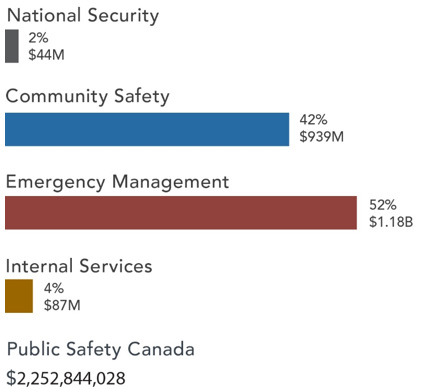
Graph 1 presents the Department's planned spending in 2026 to 2027 by Core Responsibility and for internal services.
Graph 1: Descriptive text
The graph illustrates the Department's planned spending for the 2026 to 2027 fiscal year by showing planned spending for each core responsibility in dollars and in percentages. Emergency Management represents 52 per cent with 1,182,927,785 dollars in planned spending of the total 2,252,844,028 dollars of Departmental planned spending. Community Safety represents 42 per cent or 938,754,775 dollars; Internal Services represents 4 per cent of the Department's planned spending with 86,996,799 dollars; and National Security represents 2 per cent of the planned spending with 44,164,669 dollars.
| Core Responsibilities and internal services | 2026 to 2027 Planned Spending |
|---|---|
| Core responsibility 1: National Security | $44,164,669 |
| Core responsibility 2: Community Safety | $938,754,775 |
| Core responsibility 3: Emergency Management | $1,182,927,785 |
| Internal services | $86,996,799 |
Analysis of planned spending by Core Responsibility
Planned spending for National Security core responsibility is $44,164,669 (2%) in 2026 to 2027, which is primarily attributed to strengthening cyber security and critical infrastructure resilience ($10.2 million), as well as national security operations ($8.2 million) and national security policy ($7.3 million).
Planned spending for Community Safety core responsibility is $938,754,775 (42%) in 2026 to 2027. This is primarily attributed to the following transfer payment programs:
- First Nations and Inuit Policing Program ($391.1 million);
- Assault-Style Firearms Compensation Program ($93.6 million);
- First Nations and Inuit Policing Facilities Program ($85.1 million);
- Initiative to Take Action Against Gun and Gang Violence ($80.1 million); and
- National Crime Prevention Strategy ($60.5 million).
Planned spending for Emergency Management core responsibility is $1,182,927,785 (52%) in 2026 to 2027. This is primarily attributed to the following transfer payment programs:
- Disaster Financial Assistance Arrangements Program ($1,106.9 million); and
- Canada Red Cross Donation Matching Program ($10.5 million).
Planned spending for Internal Services is $86,996,799 (4%) in 2026 to 2027. This is primarily to ensure effective delivery of departmental programs and to meet corporate obligations.
The Finances section of the Infographic for Public Safety Canada on GC InfoBase offers more financial information from previous years.
Budgetary performance summary
Table 12 presents Public Safety Canada's spending over the past three years to carry out its Core Responsibilities and for internal services. Amounts for the 2025 to 2026 fiscal year are forecasted based on spending to date.
| Core Responsibility and internal services | 2023 to 2024 Actual Expenditures | 2024 to 2025 Actual Expenditures | 2025 to 2026 Forecasted Spending |
|---|---|---|---|
| National Security | $34,058,667 | $34,118,539 | $46,633,751 |
| Community Safety | $839,595,906 | $741,108,527 | $1,193,307,788 |
| Emergency Management | $523,075,930 | $476,869,956 | $747,559,326 |
| Subtotal | $1,396,730,503 | $1,252,097,022 | $1,987,500,865 |
| Internal services | $87,393,872 | $88,720,571 | $104,409,261 |
| Total | $1,484,124,375 | $1,340,817,593 | $2,091,910,126 |
Analysis of the past three years of spending
The 2025 to 2026 Forecasted Spending is $751.1 million (56%) higher than the 2024 to 2025 expenditures. This increase is mainly attributed to increases in transfer payments for the Disaster Financial Assistance Arrangements (DFAA) ($272.9 million), as well as the Assault-Style Firearms Compensation Program (ASFCP) ($196.5 million) and the First Nations and Inuit Policing Facilities Program ($82.9 million).
The Finances section of the Infographic for Public Safety Canada on GC InfoBase offers more financial information from previous years.
Planned three-year spending on Core Responsibilities and internal services
Table 13 presents Public Safety Canada's planned spending over the next three fiscal years by Core Responsibility and for internal services.
| Core Responsibilities and internal services | 2026 to 2027 Planned Spending | 2027 to 2028 Planned Spending | 2028 to 2029 Planned Spending |
|---|---|---|---|
| National Security | $44,164,669 | $29,202,703 | $27,067,286 |
| Community Safety | $938,754,775 | $748,329,798 | $697,114,333 |
| Emergency Management | $1,182,927,785 | $156,205,541 | $151,138,712 |
| Subtotal | $2,165,847,229 | $933,738,042 | $875,320,331 |
| Internal services | $86,996,799 | $73,557,827 | $68,158,260 |
| Total | $2,252,844,028 | $1,007,295,869 | $943,478,591 |
Analysis of the next three years of spending
The decrease of $1,245.5 million (55%) in planned spending between 2026 to 2027 and 2027 to 2028 is mainly attributed to a decrease in payments under the Disaster Financial Assistance Arrangements (DFAA) program ($1,006.9 million). These payments are based on forecasts from provinces and territories for disbursements under DFAA legislation. Public Safety Canada regularly consults with provinces and territories to ensure funding levels meet disbursement requirements under the DFAA legislation and aligns funding levels accordingly. The decrease is also attributed to fluctuations in funding for the Assault-Style Firearms Compensation Program (ASFCP) ($145.1 million), as well as the First Nations and Inuit Policing Facilities Program (FNIPF) ($23.3 million) resulting from the reprofiling of funds across fiscal years. The decrease in funding is also due to the Comprehensive Expenditure Review (CER) reductions ($15.3 million total reduction in 2026 to 2027).
The decrease of $80.8 million (8%) in planned spending between 2027 to 2028 and 2028 to 2029 is mainly attributed to the maturation of funding for the Initiative to Take Action Against Gun and Gang Violence ($80.1 million), the Policy Development Contribution Program ($5 million) and the Assault-Style Firearms Compensation Program (ASFCP) ($3.6 million). The decrease in funding is also due to the Comprehensive Expenditure Review (CER) reductions ($20.4 million total reduction in 2027 to 2028 and $30.6 million in 2028 to 2029).
The Finances section of the Infographic for Public Safety Canada on GC InfoBase offers more financial information from previous years.
Funding
This section provides an overview of the Department's voted and statutory funding by core responsibility and for internal services. For further information on funding authorities, consult the Government of Canada budgets and expenditures.
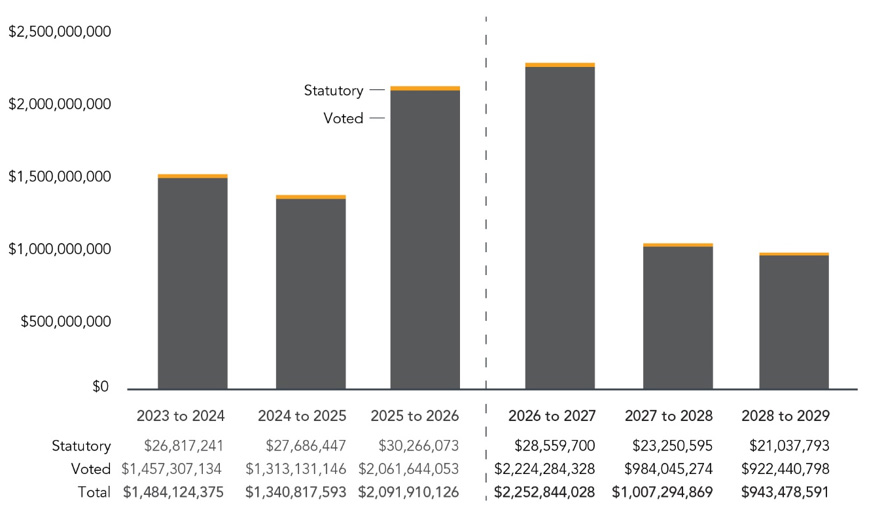
Graph 2 summarizes the Department's approved voted and statutory funding from 2023 to 2024 to 2028 to 2029.
Graph 2: Descriptive text
The graph summarizes the Department's spending trend for statutory, voted, and total spending over a six-year period, starting in 2023 to 2024 and ending in 2028 to 2029. In fiscal year 2023 to 2024, the actual statutory spending was 26,817,241 dollars and in 2024 to 2025, it was 27,686,447 dollars. In 2025 to 2026, the planned statutory spending is 30,266,073 dollars, in 2026 to 2027, it is 28,559,700 dollars; in 2027 to 2028, it is 23,250,595 dollars; and in 2028 to 2029, it is 21,037,793 dollars. In fiscal year 2023 to 2024, the actual voted spending was 1,457,307,134 dollars and in 2024 to 2025, it was 1,313,131,146 dollars. In 2025 to 2026, the planned voted spending is 2,061,644,053 dollars; in 2026 to 2027, it is 2,224,284,328 dollars; in 2027 to 2028, it is 984,045,274 dollars and in 2028 to 2029, it is 922,440,798 dollars. Finally, in 2023 to 2024, the total spending was 1,484,124,375 dollars and in 2024 to 2025 it was 1,340,817,593 dollars. In 2025 to 2026, the total planned spending is 2,091,910,126 dollars; in 2026 to 2027, it is 2,252,844,028 dollars; in 2027 to 2028 it is 1,007,294,869 dollars; and in 2028 to 2029 it is 943,478,591 dollars.
| Fiscal year | Total | Voted | Statutory |
|---|---|---|---|
| 2023 to 2024 | $1,484,124,375 | $1,457,307,134 | $26,817,241 |
| 2024 to 2025 | $1,340,817,593 | $1,313,131,146 | $27,686,447 |
| 2025 to 2026 | $2,091,910,126 | $2,061,644,053 | $30,266,073 |
| 2026 to 2027 | $2,252,844,028 | $2,224,284,328 | $28,559,700 |
| 2027 to 2028 | $1,007,295,869 | $984,045,274 | $23,250,595 |
| 2028 to 2029 | $943,478,591 | $922,440,798 | $21,037,793 |
Analysis of statutory and voted funding over a six-year period
The fluctuation in planned and actual spending over the six-year period is primarily attributed to the Disaster Financial Assistance Arrangements (DFAA) program. The DFAA contribution program represents a significant portion of Public Safety Canada's budget and is subject to unforeseen events, as the program is aimed at natural disaster response and recovery.
The DFAA program has base ongoing funding of $100 million for transfer payments. Public Safety Canada regularly consults with provinces and territories to ensure funding levels meet disbursement requirements under the DFAA legislation and aligns funding levels accordingly.
In this regard, top-up funding is received annually based on forecasted disbursement needs. In 2022 to 2023, the DFAA received an increase in funding levels of $2.3 billion for that year, $1.6 billion for 2023 to 2024 and $450 million for 2024 to 2025. Due to transfers of funding from previous years, the DFAA funding increased to $616 million in 2025 to 2026 and $1,106.9 million in 2026 to 2027 but will return to its base funding of $100 million in 2027-28 and 2028-29 until additional top-up funding is requested.
In addition to the DFAA, the fluctuations in planned spending over the next three fiscal years are primarily attributed to the Assault-Style Firearms Compensation Program (ASFCP) ($148.8 million in 2026 to 2027; $3.7 million in 2027 to 2028; and $0.1 million in 2028 to 2029) and to the Initiative to Take Action Against Gun and Gang Violence ($80.1 million in 2026 to 2027; $80.1 million in 2027 to 2028; and sunsets thereafter).
For further information on Public Safety Canada's departmental appropriations, consult the 2026 to 2027 Main Estimates.
Future-Oriented Condensed Statement of Operations
The future-oriented condensed statement of operations provides an overview of Public Safety Canada's operations for 2025 to 2026 and 2026 to 2027.
Table 15 summarizes the expenses and revenues which net to the cost of operations before government funding and transfers for 2025 to 2026 and 2026 to 2027. The forecasted and planned amounts in this statement of operations were prepared on an accrual basis. The forecasted and planned amounts presented in other sections of the Departmental Plan were prepared on an expenditure basis. Amounts may therefore differ.
| Financial information | 2025 to 2026 Forecasted results | 2026 to 2027 Planned results | Difference (Planned results minus Forecasted results) |
|---|---|---|---|
| Total expenses | $1,208,056,005 | $1,580,960,665 | $372,904,660 |
| Total revenues | $2,700,000 | $2,700,000 | $0 |
| Net cost of operations before government funding and transfers | $1,205,356,005 | $1,578,260,665 | $372,904,660 |
Analysis of forecasted and planned results
The increase in the total expenses of $372,904,660 in 2026 to 2027 compared to 2025 to 2026 is primarily attributable to higher projected expenditures for transfer payments, particularly for the Disaster Financial Assistance Arrangements program.
A more detailed Future-Oriented Statement of Operations and associated Notes for 2026 to 2027, including a reconciliation of the net cost of operations with the requested authorities, is available on Public Safety Canada's website.
Human Resources
This section presents an overview of the Department's actual and planned human resources from 2023 to 2024 to 2028 to 2029.
Actual and Forecasted Human Resources for the Last Three Fiscal Years
Table 16 shows a summary of human resources, in full-time equivalents, for Public Safety Canada's Core Responsibilities and for its internal services for the previous three fiscal years. Human resources for the current fiscal year are forecasted based on year to date.
| Core Responsibilities and internal services | 2023 to 2024 Actual full-time equivalents | 2024 to 2025 Actual full-time equivalents | 2025 to 2026 Forecasted full-time equivalents |
|---|---|---|---|
| National Security | 200 | 208 | 230 |
| Community Safety | 490 | 541 | 576 |
| Emergency Management | 366 | 398 | 433 |
| Subtotal | 1,056 | 1,147 | 1,239 |
| Internal services | 562 | 550 | 612 |
| Total | 1,618 | 1,697 | 1,851 |
Analysis of human resources over the last three years
Public Safety Canada FTEs increased by 14.4% (233 FTEs) over the last three years, from 1,618 FTEs in 2023 to 2024 to 1,851 FTEs forecasted in 2025 to 2026. This increase is attributed to growth of the following programs and initiatives over the last three years: the Assault-Style Firearms Compensation Program (ASFCP) (increase of 48 FTEs), the Canada Community Security Program (CCSP) (increase of 29 FTEs), and to support Canada's new National Cyber Security Strategy (increase of 19 FTEs).
Planned Human Resources for the Next Three Fiscal Years
Table 17 shows information on human resources, in full-time equivalents, for each of Public Safety Canada's Core Responsibilities and for its internal services planned for the next three years.
| Core Responsibilities and internal services | 2026 to 2027 Planned full-time equivalents | 2027 to 2028 Planned full-time equivalents | 2028 to 2029 Planned full-time equivalents |
|---|---|---|---|
| National Security | 227 | 168 | 162 |
| Community Safety | 517 | 354 | 311 |
| Emergency Management | 310 | 301 | 263 |
| Subtotal | 1,054 | 823 | 736 |
| Internal services | 546 | 489 | 452 |
| Total | 1,600 | 1,312 | 1,188 |
Analysis of human resources for the next three years
FTEs in 2027 to 2028 are projected to decrease by 288 (18%) from 1,600 in 2026 to 2027 to 1,312 in 2027 to 2028. This decrease is primarily attributed to the planned completion of the Assault-Style Firearms Compensation Program (ASFCP) (decrease of 137 FTEs), and the maturation of funding for the Canada Centre for Community Engagement and Prevention of Violence (decrease of 17 FTEs) and the Criminal Code Authorization Regime (decrease of 17 FTEs).
FTEs in 2028 to 2029 are projected to decrease by 124 (9.5%) from 1,312 in 2027 to 2028 to 1,188 in 2028 to 2029. This decrease is primarily attributed to the planned completion of the Assault-Style Firearms Compensation Program (ASFCP) (decrease of 34 FTEs), and the maturation of funding for Enhancing Natural Disaster Resilience (decrease of 16 FTEs) and the First Nations and Inuit Policing Facilities (FNIPF) (decrease of 11 FTEs).
Supplementary Information Tables
The following supplementary information tables are available on Public Safety Canada's website:
Information on Public Safety Canada's Departmental Sustainable Development Strategy can be found on Public Safety Canada's website.
Federal Tax Expenditures
Public Safety Canada's Departmental Plan does not include information on tax expenditures.
The tax system can be used to achieve public policy objectives through the application of special measures such as low tax rates, exemptions, deductions, deferrals and credits. The Department of Finance Canada publishes cost estimates and projections for these measures each year in the Report on Federal Tax Expenditures.
This report also provides detailed background information on tax expenditures, including descriptions, objectives, historical information and references to related federal spending programs as well as evaluations and GBA Plus of tax expenditures.
Corporate Information
Departmental Profile
Appropriate ministers:
The Honourable Gary Anandasangaree
The Honourable Eleanor Olszewski
Institutional head:
Ms. Tricia Geddes
Ministerial portfolio:
Public Safety and Emergency Preparedness
Enabling instrument(s):
Department of Public Safety and Emergency Preparedness Act (2005)
Emergency Management Act (2007)
Year of incorporation/commencement:
2003
Departmental Contact Information
Mailing address: 269 Laurier Avenue West, Ottawa, Ontario, Canada, K1A 0P8
Telephone: 613-944-4875 or 1-800-830-3118
TTY: 1-866-865-5667
Fax: 613-954-5186
Email: ps.mediarelations-relationsaveclesmedias.sp@ps-sp.gc.ca
Website: https://www.publicsafety.gc.ca/index-en.aspx
Definitions
- appropriation (crédit)
- Any authority of Parliament to pay money out of the Consolidated Revenue Fund.
- budgetary expenditures (dépenses budgétaires)
- Operating and capital expenditures; transfer payments to other levels of government, departments or individuals; and payments to Crown corporations.
- core responsibility (responsabilité essentielle)
- An enduring function or role performed by a department. The intentions of the department with respect to a core responsibility are reflected in one or more related departmental results that the department seeks to contribute to or influence.
- Departmental Plan (plan ministériel)
- A report on the plans and expected performance of an appropriated department over a 3-year period. Departmental Plans are usually tabled in Parliament each spring.
- departmental result (résultat ministériel)
- A consequence or outcome that a department seeks to achieve. A departmental result is often outside departments' immediate control, but it should be influenced by program-level outcomes.
- departmental result indicator (indicateur de résultat ministériel)
- A quantitative measure of progress on a departmental result.
- departmental results framework (cadre ministériel des résultats)
- A framework that connects the department's core responsibilities to its departmental results and departmental result indicators.
- Departmental Results Report (rapport sur les résultats ministériels)
- A report on a department's actual accomplishments against the plans, priorities and expected results set out in the corresponding Departmental Plan.
- full-time equivalent (équivalent temps plein)
- A measure of the extent to which an employee represents a full person-year charge against a departmental budget. For a particular position, the full-time equivalent figure is the ratio of number of hours the person actually works divided by the standard number of hours set out in the person's collective agreement.
- gender-based analysis plus (GBA Plus) (analyse comparative entre les sexes plus [ACS Plus])
- Is an analytical tool used to support the development of responsive and inclusive policies, programs, and other initiatives. GBA Plus is a process for understanding who is impacted by the issue or opportunity being addressed by the initiative; identifying how the initiative could be tailored to meet diverse needs of the people most impacted; and anticipating and mitigating any barriers to accessing or benefitting from the initiative. GBA Plus is an intersectional analysis that goes beyond biological (sex) and socio-cultural (gender) differences to consider other factors, such as age, disability, education, ethnicity, economic status, geography (including rurality), language, race, religion, and sexual orientation.
- Using GBA Plus involves taking a gender- and diversity-sensitive approach to our work. Considering all intersecting identity factors as part of GBA Plus, not only sex and gender, is a Government of Canada commitment.
- government priorities (priorités gouvernementales)
- For the purpose of the 2026 to 2027 Departmental Plan, government priorities are the high-level themes outlining the government's agenda in the 2025 Speech from the Throne.
- horizontal initiative (initiative horizontale)
- An initiative where two or more federal departments are given funding to pursue a shared outcome, often linked to a government priority.
- Indigenous business (entreprise autochtones)
- Requirements for verifying Indigenous businesses for the purposes of the departmental result report are available through the Indigenous Services Canada Mandatory minimum 5% Indigenous procurement target website.
- non-budgetary expenditures (dépenses non budgétaires)
- Non-budgetary authorities that comprise assets and liabilities transactions for loans, investments and advances, or specified purpose accounts, that have been established under specific statutes or under non-statutory authorities in the Estimates and elsewhere. Non-budgetary transactions are those expenditures and receipts related to the government's financial claims on, and obligations to, outside parties. These consist of transactions in loans, investments and advances; in cash and accounts receivable; in public money received or collected for specified purposes; and in all other assets and liabilities. Other assets and liabilities, not specifically defined in G to P authority codes are to be recorded to an R authority code, which is the residual authority code for all other assets and liabilities.
- performance (rendement)
- What a department did with its resources to achieve its results, how well those results compare to what the department intended to achieve, and how well lessons learned have been identified.
- performance indicator (indicateur de rendement)
- A qualitative or quantitative means of measuring an output or outcome, with the intention of gauging the performance of an department, program, policy or initiative respecting expected results.
- plan (plan)
- The articulation of strategic choices, which provides information on how a department intends to achieve its priorities and associated results. Generally, a plan will explain the logic behind the strategies chosen and tend to focus on actions that lead to the expected result.
- planned spending (dépenses prévues)
- For Departmental Plans and Departmental Results Reports, planned spending refers to those amounts presented in Main Estimates.
- A department is expected to be aware of the authorities that it has sought and received. The determination of planned spending is a departmental responsibility, and departments must be able to defend the expenditure and accrual numbers presented in their Departmental Plans and Departmental Results Reports.
- program (programme)
- Individual or groups of services, activities or combinations thereof that are managed together within the department and focus on a specific set of outputs, outcomes or service levels.
- program inventory (répertoire des programmes)
- Identifies all the department's programs and describes how resources are organized to contribute to the department's core responsibilities and results.
- result (résultat)
- A consequence attributed, in part, to a department, policy, program or initiative. Results are not within the control of a single department, policy, program or initiative; instead they are within the area of the department's influence.
- statutory expenditures (dépenses législatives)
- Expenditures that Parliament has approved through legislation other than appropriation acts. The legislation sets out the purpose of the expenditures and the terms and conditions under which they may be made.
- target (cible)
- A measurable performance or success level that a department, program or initiative plans to achieve within a specified time period. Targets can be either quantitative or qualitative.
- voted expenditures (dépenses votées)
- Expenditures that Parliament approves annually through an appropriation act. The vote wording becomes the governing conditions under which these expenditures may be made.
References:
- Footnote 1
-
Canada's GTI ranking improved by 6 places in 2022, recording no attacks or deaths for the first time since 2013.
- Footnote 2
-
Canada's GTI ranking worsened by 2 places in 2023 due to one attack and death from terrorism in Canada during the year.
- Footnote 3
-
Canada's drop in the Global Terrorism Index (GTI) score from 52 to 48 in 2025 reflects a relative increase in its exposure to terrorism-related risks, even though the country remains low on the global impact scale. According to the Global Terrorism Index 2025, several factors could have contributed to this shift, including: increased visibility and operational response to ideologically motivated violent extremism, particularly from far-right and anti-government groups; increasing radicalization of youth across Western countries; and the spread of foreign influence and content online, among others.
- Footnote 4
-
Results may be due to the prominent national media coverage on national security issues during the one-week survey window. Based on a randomized sample of 1,000 Canadians who responded to a survey in June 2023.
- Footnote 5
-
Results may be due to the prominent national media coverage on national security issues during the one-week survey window (e.g., the following article: Government pitches foreign influence registry, new powers for CSIS in attempt to curb foreign interference). Based on a randomized sample of 1,000 Canadians who responded to a survey in May 2024.
- Footnote 6
-
Results may be due to the prominent national media coverage on national security issues following the general elections. Based on a randomized sample of 1,000 Canadians who responded to a survey in May 2025.
- Footnote 7
-
Results may be due to the prominent national media coverage on national security issues during the one-week survey window (e.g., the following article: Government pitches foreign influence registry, new powers for CSIS in attempt to curb foreign interference). Based on a randomized sample of 1,000 Canadians who responded to a survey in May 2024.
- Footnote 8
-
Based on a randomized sample of 1,000 Canadians who responded to a survey in June 2025.
- Footnote 9
-
Results may be due to the prominent national media coverage on national security issues during the one-week survey window (e.g., the following article: Government pitches foreign influence registry, new powers for CSIS in attempt to curb foreign interference). Based on a randomized sample of 1,000 Canadians who responded to a survey in May 2024.
- Footnote 10
-
Based on a randomized sample of 1,000 Canadians who responded to a survey in June 2025
- Footnote 11
-
Decrease in over-year results for 2022 to 2023 may be due to a small sample size of partners who responded, the voluntary nature of the survey, and the timing of the survey (i.e., Summer 2023).
- Footnote 12
-
Results may be due to a small sample size of partners (i.e., 31 out of approximately 450) who responded and the voluntary nature of the survey.
- Footnote 13
-
The survey was not conducted for 2024 to 2025 as the methodology is under review.
- Footnote 14
-
Public Safety Canada ceased the delivery of the Regional Resilience Assessment Program in fiscal year 2024 to 2025. As such, the Critical Infrastructure Resilience Score is no longer being maintained.
- Footnote 15
-
Results may be due to a small sample size of partners who responded to the survey.
- Footnote 16
-
Results may be due to a small sample size of partners who responded to the survey.
- Footnote 17
-
The e-Governance Academy updates the National Cyber Security Index rankings on a regular basis, and thus Canada's ranking may fluctuate at any given time. The results seen here represent Canada's ranking on March 31st of each fiscal year.
- Footnote 18
-
The National Cyber Security Index (NCSI) ranks from 1st (best) to 160th (worst). Given that the NCSI is measured such that a low score (i.e., 1st) is more favourable, this target should read "ranked less than or equal to 30th." This indicator and target will be reviewed as part of the next Departmental Results Framework amendment cycle in 2026 to 2027.
- Footnote 19
-
The Canada Centre for Community Engagement and Prevention of Violence (the Canada Centre) did not launch a full stakeholder survey for the 2023 to 2024 fiscal year. Instead, priorities were to organize the first major post-pandemic conference to bring together domestic and international stakeholders (i.e., 2023 'Megaweek') event, and ongoing efforts to support wider Public Safety Canada efforts to improve the Annual Performance Report (APR) for Community Resilience Fund (CRF) recipients. As a proxy measure, the 2023 to 2024 number is drawn from post-event surveys held throughout the year by the Canada Centre to showcase ongoing CRF projects, and is based on limited feedback. To build a more accurate and reliable number moving forward, the Canada Centre plans to launch a revised and streamlined stakeholder survey, to better complement a revised APR.
- Footnote 20
-
Public Safety Canada's Departmental Results Framework specifies "an increase of 5 per year" for this indicator. The target is therefore 60 or more in 2026 to 2027.
- Footnote 21
-
Public Safety Canada continues work to improve and expand how the Annual Performance Report (APR) is used to monitor projects supported by the Community Resilience Fund. For 2023 to 2024, the figure shifted from a manual count of publications to self-reported APR data. Types of publications captured are Books (3), Curricula (4), Databases (5), Film, Video, or DVD products (4), Information brochures (3), Internet tools or resources (9), Websites (4), Manuals or Guides (10), Reports (12), Articles (20).
- Footnote 22
-
This figure is based on data provided by Community Resilience Fund recipients within the 2024-25 Annual Performance Report. The notable increase in research products between 2023-24 and 2024-25 reflects the delayed impact of Budget 2021 funding, which reached recipients in late 2023 and began yielding outputs the following year. This increase in new research products was further supported by additional CRF funds in Budget 2024, which reached recipients soon after approval. Additionally, the Annual Performance Report survey was revised to capture a broader range of public-facing products, including one-pagers and trainings, resulting in a more comprehensive count of products released to the public.
- Footnote 23
-
One advertising tactic was launched, achieving 999,800 impressions from Search Engine Marketing (SEM). Due to a variety of program and policy delays the planned marketing and advertising activities were negatively affected in 2023 to 2024. The planned media buy was reduced significantly to SEM in market between January 1, 2023 to March 31, 2023.
- Footnote 24
-
No advertising was conducted as the campaign finished in 2022 to 2023.
- Footnote 25
-
No advertising was conducted as the campaign finished in 2022 to 2023.
- Footnote 26
-
Statistics Canada updates the Crime Severity Index (CSI) figures on an annual basis, and thus figures may change from year to year and between Departmental Plans and Departmental Results Reports. Additionally, CSI data is only collected for the calendar year and, as such, the actual results for each year reflect the calendar year only (i.e., 2022 to 2023 actual results reflect results for January to December 2022).
- Footnote 27
-
Per Statistics Canada, results from the CSI are only available by calendar year, and the results for 2023 are not yet available. As such, the actual result for 2022 to 2023 reflects the CSI for the period of January to December 2022.
- Footnote 28
-
The Crime Severity Index (CSI) increased for the third consecutive year — up 2% in 2023 — continuing an upward trend that began in 2015. Significant shifts in certain types of crime led to an increase in the Non-Violent CSI, while the Violent CSI remained virtually unchanged. These increases in non-violent crimes may be attributed to an actual increase in crime, heightened public awareness, and/or policy changes that have led to more incidents being reported to the police.
- Footnote 29
-
Per Statistics Canada, results from the CSI are only available by calendar year, and the results for 2025 are not yet available. As such, the actual result for 2024 to 2025 reflects the CSI for the period of January to December 2024.
- Footnote 30
-
This data is made available on an annual basis by Statistics Canada.
- Footnote 31
-
The police-reported crime rate per 100,000 population increased in 2023 from 2022. This rate is, however, similar to the five-year high of 2019 (i.e., 5,874). Significant shifts in certain types of crime led to an increase in the non-violent crime rate, and this trend was also demonstrated in the violent crime rate. The increase in the police-reported crime rate may be due to an increase in actual crime, heightened public awareness, and/or policy changes that have led to more incidents being reported to the police.
- Footnote 32
-
Per Statistics Canada, this data is only available by calendar year, and the results for 2025 are not yet available. As such, the actual result for 2024 to 2025 reflects the data for the period of January to December 2024.
- Footnote 33
-
Actual results for this indicator are sourced from Statistics Canada's General Social Survey, which is only published every five years, and was last published in 2020 (with data up to the end of the 2019 calendar year). As such, instances of N/A indicate periods when new data is not yet available. Updated data should be available in 2025 to 2026.
- Footnote 34
-
To remain consistent in measuring this indicator, Public Safety Canada is reporting on the percentage of people who report driving within two hours of using cannabis within the past 12 months.
- Footnote 35
-
Results for 2021 to 2022 and 2022 to 2023, might have been impacted by the 3-year COVID-19 pandemic. It is important to examine the pattern of behaviour over a longer period of time in order to attempt to explain behaviour.
- Footnote 36
-
Indicator result is based on the 2024 Canada Cannabis Survey of non-medical consumers who reported having driven a vehicle within 2 hours of smoking or vaping cannabis in the past 12 months.
- Footnote 37
-
The data for this indicator is based on the calendar year, rather than the fiscal year. As such, this result is for the period from January to December of each year.
- Footnote 38
-
This percentage must be interpreted with caution, as it was calculated using a limited sample of National Crime Prevention Strategy (NCPS) projects undergoing an impact evaluation funded through grants and contributions (n=13), and thus do not represent the entirety of all NCPS projects. Moreover, the quality of some of the data used for this calculation may be low, as projects and evaluations experienced a number of challenges (e.g., COVID-19-related closures, limited participation, data entry errors, inconsistency/lack of reporting, high staff turnover, inappropriate methodologies, difficulties defining and measuring success) throughout the reported year.
- Footnote 39
-
In the past few years, this indicator has been informed solely from evaluations supported by Public Safety Canada's Crime Prevention Research and Evaluation Unit. This has not yielded an accurate picture of departmental results, as it is a small subset of the total number of projects funded, and has been influenced by issues related to conducting an evaluation (e.g. challenges with data collection related to COVID-19). National Crime Prevention Strategy projects funded through a contribution agreement are mandated to submit an Annual Performance Report identifying the level of improvement observed in 18 risk factors associated with anti-social and delinquent behaviour among children and youth.
- Footnote 40
-
Delays in program implementation led to a reduction in project participants.
- Footnote 41
-
Projects had some difficulties with recruitment and retention.
- Footnote 42
-
The results for this indicator are computed using Uniform Crime Reporting data, which is only available for the calendar year (i.e., January to December). As such, the differences computed here are the differences between the calendar years rather than the fiscal years.
- Footnote 43
-
Despite not having met the target of less than or equal to 12,000, the difference between police reported crime in First Nation communities and police reported crime in the rest of Canada has decreased slightly from 2021 to 2022.
- Footnote 44
-
The results were not available at the time of the preparation of the report. The Department is in the process of developing a revised performance measurement framework (PMF) for FNIPP. Once finalized, the PMF will include updated collection approaches for relevant crime-related data.
- Footnote 45
-
The results were not available at the time of the preparation of the report. The Department is in the process of developing a revised performance measurement framework (PMF) for FNIPP. Once finalized, the PMF will include updated collection approaches for relevant crime-related data.
- Footnote 46
-
While the Government Operations Centre (GOC) did not lead any whole-of-government exercises in 2023 to 2024, it did actively participate in Op Nanook, the Arctic Thaw Exercise Series in May, June and September 2023, and Exercise Cy-Phy in October 2023. The GOC also represented Canada at international exercises with partner organizations such as the Maritime Event Response Protocol/Maritime Operational Threat Response in the United States, and the GOC facilitated discussions with select federal partners on the subject of Continuity of Constitutional Government in January 2024.
- Footnote 47
-
The Government Operations Centre did not investigate one of the six risks outlined in the National Risk Profile due to competing priorities and resource pressures. The hazard that remained unaddressed in 2022 to 2023 was Space Weather.
- Footnote 48
-
For a second year in a row, due to conflicting priorities and staff shortages as a direct result of responding to the exceptional Wildfire Season, the Government Operations Centre did not investigate one of the six risks outlined in the National Risk Profile. The one hazard that remained unaddressed in 2023 to 2024 was Space Weather.
- Footnote 49
-
A comprehensive environmental scan of the federal programs, policy and capabilities to respond to Space Weather Event was completed in 2024 to 2025, which was the only hazard which remained unaddressed prior to 2024 to 2025.
- Footnote 50
-
The language of this indicator has changed slightly from previous reports, and the scope now includes all hazards, not just flooding events as was the case before 2021 to 2022. As such, these results differ from the results presented in previous years.
- Footnote 51
-
The Disaster Financial Assistance Arrangements (DFAA) Review, completed in 2022 to 2023, was undertaken to explore how the program can be updated to better support provinces and territories for disaster recovery and build greater resilience to future risk. Following the review, Budget 2023 provided funding to modernize the DFAA to increase its focus on prevention and resilience, given that climate change is making disasters more frequent and more severe. Part of this modernization will be looking at ways to better incentivize mitigation efforts, as well as to reduce the administrative barriers for Provinces and Territories to uptake the funding, as there are known challenges with the current program processes and design.
- Footnote 52
-
Current uptake of mitigation funding under the DFAA is a known issue that is being addressed through the DFAA review and modernization. Modest uptake is due in part to the fact that funding for the projects can only be made available at the final payment stage, which could occur 5 years or more after an event is approved for cost sharing under the DFAA.
- Footnote 53
-
One hundred percent of events meeting the DFAA cost sharing threshold presented to cabinet received an Order in Council approval (20 events, an increase of ten (10) from the previous fiscal year). Twenty-four (24) payments were distributed to provinces and territories (PTs), totaling $656,879,378, including payments which were approved to compensate for disasters in previous years but distributed to PTs during the 2024 to 2025 fiscal year ($313,738,643) and for disasters which occurred in the 2024 to 2025 fiscal year ($343,140,732). The modernization of the DFAA based on the program review is complete. New Terms and Conditions for the program were approved and were launched on April 1, 2025.
- Footnote 54
-
While Public Safety Canada undertakes emergency preparedness awareness initiatives to try to influence Canadian behaviours when it comes to preparing for disaster risk, Canadians are ultimately responsible for their own levels of preparedness. Research has found that people only take action when: (a) they know what specific actions can be taken to reduce their particular risks, (b) they are convinced these actions will be effective and (c) they believe in their own ability to carry out the tasks. Further research and analysis will be required to understand existing gaps between public awareness messaging and individual action.
- Footnote 55
-
While Public Safety Canada undertakes emergency preparedness awareness initiatives to try to influence Canadian behaviours when it comes to preparing for disaster risk, Canadians are ultimately responsible for their own levels of preparedness. Research has found that people only take action when: (a) they know what specific actions can be taken to reduce their particular risks, (b) they are convinced these actions will be effective and (c) they believe in their own ability to carry out the tasks. Further research and analysis will be required to understand existing gaps between public awareness messaging and individual action.
- Footnote 56
-
While Public Safety Canada undertakes emergency preparedness awareness initiatives to try to influence Canadian behaviours when it comes to preparing for disaster risk (e.g. EP Week), Canadians are ultimately responsible for their own levels of preparedness. Research has found that people only take action when: (a) they know what specific actions can be taken to reduce their particular risks, (b) they are convinced these actions will be effective and (c) they believe in their own ability to carry out the tasks. Further research and analysis will be required to understand existing gaps between public awareness messaging and individual action.
- Footnote 57
-
While Public Safety Canada undertakes emergency preparedness awareness initiatives to try to influence Canadian behaviours when it comes to preparing for disaster risk (such as EP Week), Canadians are ultimately responsible for their own levels of preparedness. Research has found that people only take action when: (a) they know what specific actions can be taken to reduce their particular risks, (b) they are convinced these actions will be effective and (c) they believe in their own ability to carry out the tasks. Further research and analysis will be required to understand existing gaps between public awareness messaging and individual action.
- Footnote 58
-
The Government Operations Centre (GOC) obtained data on this indicator via the 2023 to 2024 Annual Stakeholder Questionnaire (ASQ) which closed on July 19, 2024. The GOC has improved by five percentage points since its last ASQ and continues to exceed its target of 80%.
- Footnote 59
-
While the 2023 Wildfire after-action report was not published by March 2024, the indicator asked the percentage of after-action activities that were conducted, and, given this report was completed before March 2024, the result should be 100%. All internal and external stakeholders were consulted.
- Date modified: