Parliamentary Committee Notes: Minister Anandasangaree's Appearance Before the Standing Committee on Public Safety and National Security (SECU)
Supplementary Estimates (C)

March 24, 2026

Table of contents

Overview

Overview Note

General Information

Date: Tuesday, March 24, 2026
Time: 3:30 p.m. to 4:30 p.m.
Location: Room 415, Wellington Building, 197 Sparks Street

Context

Following tabling on February 12, 2026, the 2025–26 Supplementary Estimates (C) were referred to SECU for study – who in turn have invited you to appear. Senior officials from the following departments will be joining you at the table (names to be confirmed):

  • Tricia Geddes, Deputy Minister, Public Safety Canada
  • Mike Duheme, Commissioner, Royal Canadian Mounted Police
  • Erin O'Gorman, President, Canada Border Services Agency
  • Talal Dakalbab, Commissioner, Correctional Service Canada
  • Daniel Rogers, Director, Canadian Security and Intelligence Service
  • Joanne Blanchard, Chairperson, Parole Board of Canada

SECU members will likely use this opportunity to ask broader questions about the activities across your portfolio.

The Conservative Party of Canada (CPC) will likely focus questions on the Assault-Style Firearms Compensation Program, such as its costs and uptake, and they will likely also raise ongoing concerns related to community safety, including extortion. You can also expect to be questioned on whether these strategic engagements with China and India place trade considerations ahead of national security concerns.

The Bloc Québécois (BQ) will likely request an update on recruitment efforts for the CBSA and RCMP, and to ask how these investments will strengthen border management. The BQ may also raise questions about measures to protect communities from gun violence.

Sequence of the meeting

At the beginning of the meeting, you will be invited to deliver approximately five minutes of opening remarks on Supplementary Estimates (C) and their relevance to operations across the Public Safety portfolio. You are invited to appear from 3:30 p.m. to 4:30 p.m.

Officials and Chief Financial Officers will remain for the second hour of the meeting (4:30 p.m.–5:30 p.m.) to respond to questions from committee members.

Speaking Notes for the Honourable Gary Anandasangaree
Minister of Public Safety

March 24, 2026
Ottawa, Ontario

Good afternoon, Mr. Chair and honourable colleagues.

I'd like to start by acknowledging that we are meeting on the traditional and unceded territory of the Algonquin Anishnaabeg People.

Thank you for inviting me to speak today on Supplementary Estimates C.

I also wanted to take this opportunity to introduce to the committee the new Commissioner of the Correctional Service of Canada, Talal Dakalbab, who joins us here today.

The safety and security of Canadians and everyone who lives here is a key priority for our Government.

Whether it be protecting our borders, preventing crime, securing our critical infrastructure, or giving law enforcement the tools they need, we are committed to doing all we can to keep Canadians safe.

That is because we all deserve to feel safe, secure, and free in our homes and communities.

That is why our Government has and will continue to make targeted investments in programs and initiatives that advance Public Safety.

Mr. Chair, Public Safety and its portfolio partners are seeking additional authorities through the Supplementary Estimates C to support its work.

A key commitment in our Border Plan and in Budget 2025 is an increase to the number of RCMP officers with the hiring of 1000 new personnel.

These new personnel will keep our border, communities, and everyone who calls Canada home, safe and secure.

To that end, the Supplementary Estimates C contain support for these new resources. This funding will allow the RCMP to recruit and retain the personnel we need to strengthen their Federal Policing mandate.

Another top priority of ours is ensuring that foreign interference and transnational repression has no place within our borders.

The Foreign Influence Transparency and Accountability Act establishes an independent commissioner and a registry to help combat attempts at illegal and unlawful foreign influence.

Anton Boegman's nomination for Commissioner was recently was approved by both Houses and authorities sought through Supplementary Estimates C will support this implementation once the Act comes into force.

Mr. Chair, we also know that transparency and oversight of the work of Public Safety and its portfolio is essential to ensuring that the public has trust in us and our work.

Increasing this transparency and oversight across all agencies has been an important commitment of our Government.

To support that work we are seeking funding for national security and intelligence review requirements faced by Public Safety, CBSA, CSIS, and RCMP.

We are also seeking funding to establish the Public Review and Complaints Commission that will review public complaints against the CBSA and RCMP.

This independent body will provide external oversight for the Agency and investigate complaints about officer conduct or systemic issues in a fair and transparent way.

Additional funding requested by the Correctional Service of Canada will enable CSC to deliver on its public safety mandate and legislated requirements.

Lastly, within the Supplementary Estimates C, we are also seeking funding to support RCMP and CBSA's initiatives to counter drug impaired driving.

Mr. Chair, I think that all of my colleagues here can agree that the safety and security of our country and communities are some of the greatest responsibilities we face as parliamentarians.

I encourage the committee to support the additional authorities we are seeking.

Thank you. And I look forward to answering your questions.
Questions and Answers

Key Messages

Public Safety Canada (PS)

PS - Priorities

We're moving swiftly on the legislation that keeps Canadians safe.

  • Bill C-8 will improve our resilience to cyber threats in four sectors: finance, telecommunications, energy and transportation.
  • Bill C-12 reinforces security by modernizing border and immigration laws and by targeting transnational organized crime and illicit financing.
  • Bill C-22 provides law enforcement with tools to lawfully access basic information and data.

Protecting our Arctic sovereignty is Canada's top security imperative.

  • The recent tour of Yellowknife underscored urgent, on-the-ground challenges facing law enforcement and community members.
  • We're strengthening our northern footprint and working directly with Indigenous leaders to safeguard communities and drive economic security.

Getting guns off our streets keeps them out of the wrong hands.

  • The $742.5 million Assault-Style Firearms Compensation Program is set to remove roughly 152,000 prohibited firearms from circulation.
  • As of March 23, more than 52,000 prohibited firearms have already been declared.
PS - Comprehensive Expenditure Review (CER)

We are taking the necessary steps to meet our target of over 15% saving over three years.

  • Public Safety is planning the following spending reductions:
    • 2026-27: $15.3M
    • 2027-28: $20.4M
    • 2028-29 & ongoing: $30.6M
  • Strategies used to achieve saving while maintaining our core mandate are:
    • Focusing on modernization and efficiency without compromising critical services.
    • Streamlining structures and centralizing admin functions to improve productivity.
    • Technology and automation by leveraging digital tools and AI to automate tasks and streamline case management.
  • Reductions include the implementation of measures to manage additional budgetary pressures and the non renewal of sunsetting programs, in addition to the those arising from the Comprehensive Expenditure Review.

The department is committed to minimizing involuntary departures and will support employees through voluntary departures, internal opportunities, and upskilling. Early Retirement Incentive (ERI) details will follow once approved by Parliament.

PS - Key Issues

We have strengthened Canada's ability to detect, disrupt, and prevent extortion across Canada.

  • Multiple bills are before Parliament that provide additional tools in addressing these issues.
  • Budget 2025 announced $1.7 billion to strengthen the Royal Canadian Mounted Police (RCMP) investigative capacity.
  • We are uniting all levels of government and community leaders to safeguard local businesses and protect residents.

We're moving fast to implement the Foreign Influence Transparency and Accountability Act.

  • Anton Boegman, former B.C. chief electoral officer, has been identified as the candidate to lead this work.
  • Resolutions confirming the appointment were adopted by both the House and the Senate.
  • The Office and its IT systems will be fully ready the moment the Act comes into force.

Royal Canadian Mounted Police (RCMP)

RCMP - Priorities

We are addressing firearms violence.

  • Collecting assault-style firearms where the RCMP is the police of jurisdiction.
  • Supporting direct communication to licenced individuals and second level technical firearms validation and reporting.

We are working to keep children, youth, and educators safe in schools and communities across Canada.

  • Building relationships with local schools to ensure school safety plans are updated and current.
  • Supporting response to school-based incidents through the RCMP's School Action for Emergencies (SAFE) Plan.

Working closely with school administrators to enhance safety.

RCMP - Comprehensive Expenditure Review (CER)

We are taking the necessary steps to meet our target of saving.

  • A total of 285 employees received affected letters on February 26, 2026, signaling their area of work is being impacted.
  • Information posted on the Treasury Board Secretariat CER reporting website:
    • Total Population (as of March 2025): 11,220
    • Total number of positions to be eliminated:
      • Non-executive: 150
      • Executive: 23
    • Number of positions to be eliminated through WFA/CT
      • Non-executive: 63
      • Executive: 13
    • Letters of affected or at-risk status sent
      • Non-executive: 264 (236 Public Servant, 28 Civilian Members)
      • Executive: 21
RCMP - Specific Issues

We are ramping up recruitment to add 1,000 more personnel.

  • Updating and modernizing its recruitment process, including
    • reducing application processing times
    • removing barriers, particularly for those in equity-deserving groups
    • focusing on specialized skills sets required for federal policing.
  • Modernizing training, workforce development, and leadership pipelines across the federal mandate.
  • In the first year, 259 new personnel will be added nationally who will be focused on countering organized crime and national security threats.

We are implementing recommendations identified by the Auditor General.

  • The RCMP has implemented a National Recruitment Strategy, with progress monitored through data and performance indicators.
  • The RCMP is receiving guidance from its Management Advisory Board to strengthen recruitment and workforce management, aligned with the Auditor General's recommendations.

We are strengthening Indigenous recruitment and development, with a focus on the North.

  • Strengthening its Arctic presence by working to onboard 44 new dedicated specialized resources (27 police officers / 17 specialized personnel), enhancing intelligence collection, and integrating more closely with partners.

Canada Border Service Agency (CBSA)

CBSA - Priorities
1,000 New CBSA Officers
  • Budget 2025 allocated $669 million over five years and $198.3 million ongoing to bolster CBSA operations.
  • With this investment, and funding under the Border Plan, the CBSA will hire 1,000 new officers.
  • Border services officers trainees are currently at the CBSA college, with more to be hired over the next three years.
  • I was at the college on February 27 to personally congratulate the first cohort of border services officer recruits who graduated as part of the 1,000 new officers.
Removals
  • The CBSA removed more than 22,000 inadmissible persons in 2025, the highest ever in the history of the Agency, thanks to $55.5 million in additional funding under the Border Plan.
  • The agency is removing approx. 400 inadmissible persons each week, including those involved in extortion.

Over 550 CBSA personnel are focussed on immigration investigations and removals. CBSA also has a tip line – the Border Watch Line – for the public to report violation of immigration law.

CBSA - Comprehensive Expenditure Review (CER)
  • CBSA's budget was reduced by two percent, or approx. $52 million.
  • CBSA is reducing its workforce by 348 employees (18 executives and 330 non-executives), only in national headquarters.
  • To achieve this, approx. 700 employees reporting to national headquarters received letters indicating that their positions are affected.

These workforce adjustments will have no impact to CBSA frontline operations.

CBSA - Specific Issues
IT Outages
  • Since the major outage last fall, the CBSA and Shared Services Canada produced a report and are implementing an action plan.
  • The CBSA has been talking to air travel and commercial and trade stakeholders throughout the fall and winter to update on progress, and this will continue.
  • In the event of an IT outage, safety and security standards are upheld at all times.

Hot Issues - Anticipated Questions

Committee notes

Q1 - What measures are being taken to protect children and ensure that social media companies effectively address online threats on their platforms
  • The tragic events in Tumbler Ridge underscore the urgent need to address online harms and prevent real-world violence.
  • Canada already has programs to intervene when people are being radicalized online. Last week I met with the heads of five frontline violence prevention programs supported by Public Safety Canada who are doing excellent work counselling people away from violent extremism.
  • However, we are seeing a concerning and exponential increase in people engaging with violent/extremist content online, particularly among youth, some as young as 9 years old.
  • To combat this online radicalization, more must be done – particularly to improve reporting by social media and AI companies to law enforcement when content signals a risk of imminent real-world violence.
  • Research indicates that in most school shootings, perpetrators communicated their intentions in some form, including electronic messaging and online posts.
  • I am actively working with the Ministers of AI and Digital Innovation, Culture and Identity, and Justice to explore ways we can improve reporting, including referrals to frontline counselling programs.
Q2 - Were you and your department consulted prior to the Prime Minister's (PM) decision to commit Canada to a strategic partnership with either the People's Republic of China (PRC) or India? Have you or your department reassessed its risk assessment(s) as a result of these strategic partnerships
  • Our risk assessments have not changed. The strategic partnership announced by the PM acknowledges that there will be some areas of cooperation that may be more difficult.
  • The strategic partnership is a reflection of the reality in terms of the need to diversify relationships on trade and investment.
  • The PM also referenced guardrails in regard to sectors such as Artificial Intelligence, critical minerals, and defence.
  • Economic factors together with considerations of national security continue to be at the center of Canada's approach to counter and mitigate risks related to increased commercial engagement regardless of country of origin.
  • Over recent years Canada has taken steps to strengthen our resilience and to bolster our economic security toolkit (e.g. modernization of the Investment Canada Act, adoption of the Sensitive Technologies Research and Affiliations of Concern (STRAC) Policy, the release of Canada's Sensitive Technology List, etc.)
Q3 - With regard to China and India, how is the government protecting Canada's national security while pursuing its broader goal of strengthening Canada's economic security
  • While the government is seeking to diversify trade and bring in additional investments including from non-traditional partners, economic security guardrails continue to be important.
  • For example, within the federal government responsibility, a national security review process has been put in place for major projects under the Building Canada Act.
  • The government's investments in domestic capacity and autonomy are all part of that overall approach.
  • Guardrails include foreign investment screening.
  • In addition, the government is also sponsoring cyber security legislation which is currently being studied by the Standing Committee on Public Safety and National Security.
  • Further work is ongoing in terms of critical infrastructure and what additional economic security measures may be required.
  • Additional measures to mitigate risks may come from another department or minister that has the appropriate mandate and authorities in a specific sector of concern, such as transport, natural resources, and finance.
Q4 - There are concerns about individuals linked to the Iranian regime entering Canada. What screening measures and protocols are in place to protect Canada
  • Before a foreign national travels to Canada:
    • They must apply for a visa.
    • Visa applications are assessed by Immigration, Refugees and Citizenship Canada (IRCC).
    • During the visa assessment process, individuals are subject to security screening conducted jointly between IRCC, Canada Security Intelligence Service (CSIS), and the Canada Border Service Agency (CBSA).
    • If IRCC has concerns of inadmissibility to Canada, the file is referred for in-depth security screening to the CBSA or CSIS.
    • For those that may be inadmissible (e.g. a member of the Iranian regime), the CBSA provides a non-favourable recommendation to IRCC who will refuse the visa and ensure no travel takes place.
  • CBSA is responsible to conduct risk assessments before arrivals to identify individuals who are high risk and works with officers overseas to ensure that inadmissible individuals do not board planes bound for Canada.
  • If a foreign national arrives at a port of entry, officers will make an admissibility assessment after having taken all relevant evidence into consideration including:
    • System checks, asking about employment history, and taking any statements or evidence provided by the individual.
    • If the individual is found to be inadmissible, they can either withdraw their request to enter Canada or be issued a removal order by a delegated CBSA official or the Immigration and Refugee Board (IRB).
  • If the CBSA becomes aware of a foreign national in Canada who may be inadmissible, an investigation is conducted.
    • If concerns are well-founded, the CBSA will report the individual inadmissible and refer the case to the IRB.
    • If the IRB determines that the individual is inadmissible, a removal order will be issued and the CBSA will work to removal them from Canada as soon as possible.
  • As part of designated the Iranian regime, IRCC has reviewed over 17, 800 applications from Iranians for potential inadmissibility. IRCC has cancelled 239 visa and CBSA has opened 172 investigations. 17 individuals have cases before the Immigration and Refugee Board of Canada (IRB). 1 individual has been removed.
Q5 - The Foreign Influence Transparency and Accountability Act received Royal Assent in June 2024, but its core provisions are not in force. Why
  • There are three key pieces needed for the Act to come into force:
    • Appointment of a Foreign Influence Transparency Commissioner (Anton Boegman nominated);
    • Development of regulations which set out the detailed requirements for registration, exemptions and compliance; and
    • Development of a secure IT solution to support the Registry.
  • Work is ongoing to hire the staff needed to run the Office, set up the Commissioner's website and secure office space.
  • Similar efforts to implement comparable Acts in allied countries have taken over two years.
Q6 - Why is the government failing to deport non-citizens convicted of serious crimes, and why are judges able to issue lighter sentences that effectively allow these individuals to avoid deportation
  • The CBSA has a legal obligation to remove as soon as possible all foreign nationals who are inadmissible to Canada under IRPA and are subject to an enforceable removal order. The Agency places the highest priority on removal cases involving national security, organized crime, crimes against humanity, and criminality.
  • The CBSA removed more than 22,000 inadmissible persons in 2025, including 1,136 persons (approx. 5%) with serious inadmissibilities such as members of designated regimes, those guilty of war crimes, serious criminality, national security risks and terrorism.
  • As you may recall, the Border Plan provided new funding to support CBSA in increasing capacity to reach 20,000 removals for fiscal years 2025-26 and 2026-27.
  • As of the end of February 2026, the CBSA has exceeded the new 2025-26 target by completing over 21,000 removals; this is higher than any of the past 5 years.
  • The CBSA is currently removing approximately 400 inadmissible persons from Canada each week.
  • For higher risk cases, CBSA recommend that escort officers accompany the foreign national to their destination. In 2025, CBSA conducted over 1,600 escorted removals, representing approximately 7% of the total removals, and the highest volume in six years.
  • Criminal proceedings take precedence over immigration matters and removal cannot take place until the person has completed serving their sentence. Steps in the removal process can be conducted concurrently to a person serving their sentence, ensuring the removal can take place once a criminal sentence has been completed. After a foreign national has exhausted or waived all legal avenues of recourse which may stay removal, and any impediments to removal (such as obtaining travel documents) have been resolved, the CBSA will finalize removal arrangements at the earliest opportunity.
  • The Supreme Court of Canada has clarified that collateral immigration consequences (e.g. the potential for deportation) are a relevant factor that sentencing judges can and should consider when determining a sentence. The court emphasized that judges should not impose lenient sentences solely to avoid deportation but can consider these consequences as part of an individualized and just sentence.
If asked if making a claim for refugee protection will allow someone with criminality to remain in Canada:
  • Making a refugee claim does not exempt those with serious from the consequences of their actions. Pursuant to the Immigration and Refugee Protection Act, a person is ineligible to make a claim if they have been convicted of serious criminality.
  • As of March 23, the number of people inadmissible for serious inadmissibility in our removals inventory is as follows, broken down by type of inventory. There are 1,660 individuals in the 'Removals in Progress' inventory and 964 in the 'Wanted' inventory, totalling 2,624 actionable cases.
  • Additionally, there are 3,130 individuals in the 'Removal not possible' inventory, which includes individuals that cannot currently be removed. These include, but are not limited to, pending Federal Court appeals, criminal charges, or Pre-Removal Risk Assessments, and sentences of imprisonment.
Table 1: Removal Inventories
Removal Inventories Priority 1
Serious Inadmissibility
Removal Not Possible 3,130
Wanted 964
Removal In Progress 1,660
Total 5,754
Q7 - Extortion has reached record levels, putting communities and residents at risk. What actions are being taken
  • Protecting Canada and Canadians from the threat created by organized crime groups, including extortion, is a top priority for our government and we remain fully committed to aggressively disrupting and dismantling these illegal activities across the country.
  • The Financial Transactions and Reports Analysis Centre will surge resources to combat extortion. This will enable law enforcement to receive more timely and relevant financial intelligence to identify criminal networks and support investigations.
  • By improving how financial intelligence is collected and shared, law enforcement will be better equipped to trace criminal networks, support investigations, and hold those responsible accountable.
  • The Government of Canada also recently convened summits on extortion in Surrey, B.C. and Brampton, Ontario, bringing together federal, provincial, and municipal leaders, along with law enforcement partners, including the Canada Border Services Agency and the Royal Canadian Mounted Police (RCMP), to strengthen coordination and advance integrated efforts to disrupt cross-border criminal networks and protect local businesses and residents.
  • As well, Bill C-12, the Strengthening Canada's Immigration System and Borders Act, proposes comprehensive reforms to strengthen anti-money laundering and anti-terrorist financing (AML/ATF) supervision, compliance, and enforcement, including by increasing AML/ATF civil penalties by forty times, and criminal fines by ten times, their current amount.
Q8 - Why has your government failed to properly fund Indigenous policing, despite the growing safety risks caused by longstanding underinvestment
  • Everyone in Canada should feel safe in their community.
  • The Government of Canada works with First Nations and Inuit partners, provinces and territories, and with self-administered police services to support the delivery of culturally-responsive policing in First Nations and Inuit communities.
  • Budget 2024 committed $267.5 million over five years, and $92.5 million per year ongoing, for the First Nations and Inuit Policing Program; and $200 million over five years, to repair, renovate and replace policing facilities in First Nations and Inuit communities.
  • These investments are helping to stabilize the funding support for First Nations and Inuit police services, which is cost-shared based on a 52% federal – 48% provincial/territorial ratio.
  • The Government of Canada continues to work with provinces/territories and Indigenous partners to roll out these investments.
Q9 - What is the Public Safety Portfolio doing to support the Arctic region and respond to the threats and risks facing Canada's Arctic Sovereignty
  • The Public Safety Portfolio is actively engaged in the region, in collaboration with Territorial partners and Indigenous communities, to address threats to the public and economic security of Canadians and businesses in the Arctic.
  • The Canadian Security Intelligence Services' (CSIS) has meaningful relationships in Canada's Arctic with Territorial governments, Inuit organizations, local leaders, and the private sector, providing valuable intelligence.
  • The planned recruitment of 1,000 new Canada Border Services Agency (CBSA) officers and 1,000 Royal Canadian Mounted Police (RCMP) personnel will bolster national security, border integrity, and public safety, while reflecting Canada's cultural, demographic, and geographic diversity, including in the Arctic.
  • As the Government of Canada steps up its investments in the Arctic, the national security community will be stepping up as well. And not only on economic security. This means the RCMP, CBSA and CSIS will be building on their partnerships with Indigenous communities to bolster their security, resilience, and prosperity in the face of increasing threats.
  • Recruitment in the North and Arctic Regions remains a key focus across my Portfolio and I am committed to growing our presence in our Northern communities, putting boots on the ground where needed to further Canada's collective approach to secure our communities and borders from serious domestic and foreign threats.
Q10 - Have Bills C-5 and C-75 have failed Canadians? And will you commit today to repealing these laws so we can restore meaningful jail time for serious offenders and put an end to the catch and release system
  • Repealing former Bill C-75 would undo several significant changes to the Criminal Code, beyond the bail provisions. These include restricting preliminary inquiries to offences punishably by a maximum of 14 years imprisonment (previously available for all indictable offences) and strengthening protections for victims of intimate partner violence (e.g., higher penalties where the offender has a prior IPV conviction), among others.
  • Through Bill C-14, the Bail and Sentencing Reform Act, and Bill C-16, the Protecting Victims Act, the Government is taking concrete steps to strengthen accountability, reinforce public safety, and ensure the justice system better protects victims and communities.
    • These two bills propose a recalibration of some of the reforms that were enacted by the former Bill C-5.
    • Specifically, Bill C-14 would clarify that the principle of restraint – that has been mandated by the Supreme Court of Canada as required under the Charter and was codified in former Bill C-75. It would do so by clarifying that the principle of restraint does not mandate release and direct police and courts on its application (e.g., by directing courts not to give primary consideration to release where a reverse onus applies).
    • Bill C-14 would also re-enact the restriction on conditional sentence orders (CSOs) for sexual assault where the Crown proceeds by indictment that was repealed by former Bill C-5 and introduce new restrictions for all child sexual offences.
    • Bill C-16 would strengthen mandatory minimum penalties (MMPs) in the Criminal Code by ensuring that MMPs previously struck down by courts, but that remain on the books, would once again become operative and would be protected against future Charter challenges. This would restore clarity and consistency in sentencing and ensure that serious offences are met with penalties that reflect their gravity.
Q11- What actions is the Government of Canada taking to combat hate and better protect communities
  • The Government of Canada is taking concrete action to combat all forms of hate to better protect communities and keep them safe.
  • These efforts include investing in police training, preventing and countering terrorism and violent extremism, and supporting vulnerable communities to protect their gathering spaces.
  • It also includes strengthened collaboration with community partners to better understand their needs and concerns regarding community safety.
  • Public Safety Canada is also working with other orders of government and law enforcement partners across the country to identify concrete actions to help address the public safety threat of antisemitism, through work such as developing
  • National Commitments to Combat Antisemitism with the first iteration published on January 26, 2026, and ongoing updates expected every 6 months going forward.
  • The Government is also advancing these priorities by implementing Canada's first Action Plan on Combatting Hate, and through legislation, such as Bill C-9 which aims to address hate crimes, intimidation, obstruction, the display of certain hate or terrorism symbols and the definition of hatred to clarify what constitutes a hate crime or hate speech.
  • The Government of Canada also presented Bill C-22 in March 2026, that aims to strengthen the Criminal Code and give law enforcement and the Canadian Security Intelligence Service (CSIS) the tools they need to disrupt crime, investigate serious threats, and protect our communities.
  • The Royal Canadian Mounted Police continues to collaborate with police services across Canada to share best practices and develop new tools to respond to hate crimes.
  • Hate crime is unacceptable and our government will continue to take concrete action to ensure all Canadians can feel safe to be who they are without the threat of violence.
Q12 - What is the purpose the Interpersonal Violence Disclosure Protocol (Clare's Law) Act
  • The Act is designed to help individuals at risk of intimate partner violence access information about a partner's documented history of violence so they can make informed decisions about their safety.
  • It is modeled after the U.K.'s Domestic Violence Disclosure Scheme and named after Clare Wood, a woman who was murdered by a former partner with a history of violence unknown to her.
  • The main goal of Clare's Law is prevention, and to empower people with information before harm occurs.
Q13 - How does Clare's Law work in practice? What are the "Right to Ask" and "Right to Know"
  • Right to Ask: Individuals can request information from police about whether a current or former intimate partner has a known history of domestic or interpersonal violence.
  • Right to Know: Police may proactively relevant risk-related information to someone they believe is at significant risk, even if no request has been made.
  • Applications are confidential, and the partner being checked is not informed that a request was made.
  • Police follow a structured protocol to assess risk before determining whether disclosure is necessary for safety.
Q14 - Is Clare's Law a national program administered by the Federal Government
  • No. Clare's Law is not a national program, but rather it is implemented through provincial legislation.
  • Each jurisdiction designs its own disclosure protocol, framework, and supporting services.
  • As such, the RCMP participates in disclosure processes only in provinces where it is the police service of jurisdiction, and where Clare's law has been implemented through provincial legislation.
Q15 - Which Provinces have implemented Clare's Law, and how are they applying it
  • Saskatchewan was the first province to enact Clare's Law in 2020, offering disclosures through local police services based on risk assessments.
  • Alberta implemented its legislation in 2021, including an online portal to make applications more accessible.
  • Newfoundland and Labrador administers disclosures under its Interpersonal Violence Disclosure Protocol Act through both the RCMP and the Royal Newfoundland Constabulary.
  • Manitoba is the most recent province to have implemented Clare's Law, expanding disclosure to include family and sexual violence and connecting applicants to community-based supports.
Q16 - What safeguards are in place to protect privacy and ensure information is disclosed appropriately
  • Police follow a formal risk-assessment protocol before disclosing any personal information.
  • Provincial protocols require disclosures to be limited, necessary, and focused solely on preventing harm.
  • The RCMP applies privacy impact assessments to ensure compliance with federal privacy laws in jurisdictions where it delivers the program.
Q17 - How do the "red flag" laws work
  • "Red Flag" laws have been in effect as of December 2023.
  • "Red Flag" laws allow any individual to apply to a court for an emergency prohibition or limitations on access order, to prohibit temporarily possession or access to firearms or another weapon by an individual who may pose risks to themselves or others.
  • These orders complement existing tools, such as calling 911 in urgent and life-threatening situations.
  • When an emergency prohibition order is issued, the person cannot possess a firearm or any other weapon for up to 30 days. Any firearm, firearm licence, other ownership documents, or other weapons in their possession must be surrendered. The weapons may be seized by police or turned in by the owner.
  • These orders do not result in criminal record for the person subject to the order, except in event of a breach of the order and conviction of an offence.
Q18 - How do the "yellow flag" laws work
  • "Yellow flag" laws have been in effect as of March 2025.
  • "Yellow flag" laws create a temporary firearms licence suspension regime. This requires a Chief Firearms Officer to suspend a firearms licence when they have reasonable grounds to suspect that a licence holder is not eligible to hold it. This prevents the individual from acquiring, transferring or importing firearms for up to 30 days.
  • During the suspension, the licence holder will be allowed to keep their firearm(s) but will not be allowed to use, acquire, or import firearms.
  • If the licence holder does not follow these restrictions, their licence can be revoked.
  • The licence holder's use, acquisition and import privileges will be reinstated once the suspension period has elapsed or earlier if the Chief Firearms Officer is satisfied that the reasons for suspension no longer exist.
  • If a Chief Firearms Officer determines that a licence holder is ineligible for a licence, they may revoke the firearms licence at any time.
Q19 - How does mandatory licence ineligibility and revocation work
  • Mandatory licence ineligibility and revocation has been in effect as of April 2025.
  • Individuals convicted of an offence where violence was used, threatened or attempted against an intimate partners or family member are ineligible for a firearms licence. Chief Firearms Officers must refuse to issue a licence to individuals in these circumstances.
  • A Chief Firearms Officer must also revoke a firearms licence if they have reasonable grounds to suspect the licence holder may have engaged in domestic violence or stalking.
  • All firearms must be delivered to a peace officer. In effect as of April 2025.
Q20 - What new measures are being put in place to address firearm safety risks posed by individuals subject to a protection order
  • Once Protection Order regulations are finalized, individuals subject to a protection order will not have access to a firearms licence – an application will be refused and a licence will be revoked.
  • Consultations were required to develop the regulations and to ensure readiness and effective implementation of these harm reduction measures related to protection orders.
  • Following public and stakeholder feedback on the proposed regulations, work is actively underway to address feedback from victims, such as the inclusion of peace bonds in the definition of "protection order".

Supplementary Portfolio Questions

Public Safety (PS) - Committee notes

Q1 - Several police services have stated they will not participate in the Assault-Style Firearms Compensation program. How can this program keep communities safe if it diverts resources away from frontline services
  • This Program offers to those who wish to participate a way to turn in their prohibited firearm and receive compensation for it. The Program will use a range of solutions to collect the firearms, specifically the Royal Canadian Mounted Police (RCMP), local police and mobile collection units.
  • The work of the Assault-Style Firearms Compensation Program (ASFCP) cannot, and will not, compromise the crucial work that front-line police undertake to keep our communities safe every day. That is why funding is being provided to support participating police of jurisdiction in collecting firearms using police on overtime, off duty and alternative operational resources.
  • Firearms collection by the RCMP under the Program will make use of alternative resources to minimize impacts on front-line policing. Finally, the Program has retained the services of a private contractor to pick up firearms from police detachments and destroy them and to operate Mobile Collection Units in appropriate areas.
Q2 - It has been reported that individuals will not receive reasonable compensation for their firearm, with some seeing values of $1in the Program's online portal
  • The ASFCP provides an opportunity to receive fair, market-based compensation for prohibited firearms. Up to $248.6 million of the Program's funding envelope is available for compensation to businesses and individuals. Misinformation is being circulated on how much compensation individuals will receive. Individuals should be sure to check the correct compensation amounts for eligible firearms, which are provided on the Public Safety Website and the Program's Web Portal. If you see a $1 placeholder amount when declaring a firearm in the Web Portal, this is not the actual compensation amount. It signals that you should call the Program's Contact Centre for further details about the firearm.
If asked specifically about a $2 compensation value:
  • This was a placeholder amount used when compensation amounts were not yet available for the more recent entries. The actual compensation amounts for these eligible firearms have since been added. The placeholder signaled that the individual should call the Program's Contact Centre for further details.
Q3 - How were compensation amounts for prohibited firearms determined
  • Compensation amounts were determined following in-depth research including consultation with the Canadian Sporting Arms and Ammunition Association (CSAAA), reviewing of manufacturer prices, Canadian dealer, retailer prices, foreign retailer prices, pricing guidebooks and auction listings. Wherever possible, manufacturer prices and Canadian retail prices were given priority.

Royal Canadian Mounted Police (RCMP) - Committee notes

Recruitment
Q1 - Given existing recruitment challenges, how will the RCMP recruit an additional 1,000 federal policing personnel
  • The addition of 1,000 new RCMP personnel is a significant workforce expansion. This investment will focus on tackling financial crimes and increase investigative capacity to address the most serious criminal threats, including organized crime, cybercrime and national security.
  • New personnel will be recruited through targeted strategies focused on the specialized skill sets required for federal policing. The approach will also include attracting experienced officers.
  • A phased implementation plan will align recruitment, training, and security clearance capacity to support timely onboarding of new personnel.
  • In the first year, 259 new personnel will be added nationally who will be focused on countering organized crime and national security threats.
If pressed further on how this affects front-line in provinces and territories:
  • This will not affect the RCMP's ongoing recruitment efforts and its commitment to hire and train more officers to meet the needs of the organization.
  • The goal is to get more Regular Members trained and to the front line as quickly as possible. 
Q2 - The RCMP's workforce planning was identified as an issue in the Auditor General's report. What are you doing to address the gaps identified
  • The RCMP has begun implementing many of the recommendations identified by the Auditor General.
  • The RCMP now has a National Recruitment Strategy, supported by a clear action plan and dedicated leadership to deliver on its commitments. Progress will be tracked using data and performance indicators.
  • The RCMP has been receiving advice from its Management Advisory Board to support improvements to recruitment and workforce management. These improvements are in alignment with the Auditor General's recommendations.
US Consulate Shooting
Q3 - Why is the RCMP involved if the Toronto Police Service (TPS) is the lead
  • The RCMP routinely works in close collaboration with local police across Canada—especially on matters involving diplomatic protection and incidents at or near embassies and consulates.
  • The RCMP's Integrated National Security Enforcement Team GTA brings specialized national security expertise and international liaison capacity, which complements TPS's lead role.
India
Q4 - What actions has the RCMP taken in response to allegations involving agents of the Government of India with ties to criminal networks in Canada
  • The RCMP has several ongoing investigations pertaining to these allegations.
  • For reasons of operational integrity and security, the RCMP does not provide further details while investigations are ongoing.
  • The safety and security of Canadians remain the RCMP's top priority, and where serious and significant public safety threats have been identified, a proactive public awareness approach has been taken to prevent further harm.
Firearms
Q5 - Minister, why is the government moving forward with the buyback of assault-style firearms
  • Our government is taking a comprehensive and evidence-based approach to keeping Canadians safe. Assault-style firearms—those capable of rapid fire and designed for military purposes—have no place in our communities. That's why, since 2020, Canada has prohibited the use, sale, and importation of more than 1,500 models of these firearms; that list has since grown to 2,500. This was done in the wake of the tragic Nova Scotia mass killing, the worst in our country's modern history. Our goal is simple: protect public safety and prevent future tragedies.

Canada Border Services Agency (CBSA) - Committee notes

Q1 - What is the CBSA doing to remove IRGC/Iranian regime members
  • CBSA officers are investigating Iranian foreign nationals who are in Canada and who served in the IRGC or were senior members of the regime. They are bringing those people before the Immigration and Refugee Board (IRB) and making the case against them.
  • 32 persons have so far been reported inadmissible by the CBSA for being a senior official in the Iranian regime:
    • 3 were found inadmissible and issued with a removal order. 1 person was already removed, 2 are pending removal proceeding.
    • 5 were found not inadmissible. The Minister appealed 4 decisions: 2 are ongoing. 2 were dismissed. The Minister filed judicial review of the 2 unsuccessful appeals: 1 remains ongoing and 1 was discontinued. 1 case was never appealed.
    • 4 individuals left Canada before admissibility proceedings
    • 20 other cases are still ongoing at various stages of admissibility proceedings: 6 are pending review, 6 are pending case preparation for admissibility hearing, 8 admissibility hearings are ongoing.
  • The Administrative Deferral of Removal for removals to Iran does not apply to senior Iranian officials. As these officials are inadmissible on the ground of human or international rights violations, they can be removed despite it.
  • The CBSA's Border Watch Line is available for organizations and members of the public to submit tips on suspected regime members. Since the original designation of the Iranian regime in November 2022, the CBSA has received approximately 280 tips.
  • As of March 5, 2026, under the designation of the Iranian regime:
    • 17,800 visa applications were reviewed for potential inadmissibility
    • 239 visas have been cancelled by Immigration, Refugees and Citizenship Canada (IRCC)
    • 174 investigations have been opened by the CBSA
    • 79 investigations have been concluded by the CBSA, which means that the individuals in question were either not in Canada or determined not to be a senior official in the Iranian regime and therefore not inadmissible for this reason
    • 32 persons have been reported inadmissible by the CBSA for being a senior official in the Iranian regime.
      • 3 were found inadmissible and issued with a removal order. 1 person was already removed, 2 are pending removal proceeding.
      • 5 were found not inadmissible. The Minister appealed 4 decisions: 2 are ongoing. 2 were dismissed. The Minister filed judicial review of the 2 unsuccessful appeals: 1 remains ongoing and 1 was discontinued. 1 case was never appealed.
      • 4 individuals left Canada before admissibility proceedings
      • 20 other cases are still ongoing at various stages of admissibility proceedings: 6 are pending review, 6 are pending case preparation for admissibility hearing, 8 admissibility hearings are ongoing.
Q2 - What is the CBSA doing to stop IRGC/Iranian regime members to come into the country
  • In November 2022, Canada designated the leadership of the Iranian government as inadmissible to Canada and this designation, under the Immigration and Refugee Protection Act (IRPA), is a mechanism aimed at ensuring senior government officials who served from June 23, 2003 onward do not benefit from access to Canada.
  • Members of the IRGC are also inadmissible to Canada under an additional provision of the IRPA. Under the designation, visas have been cancelled, investigations launched, and admissibility hearings completed.
  • The CBSA closely monitors international developments which could give bad actors a motive to seek safe haven in Canada, so that we may anticipate and prevent unauthorized travel attempts.
Q3 - What is the CBSA's role in tackling extorsion
  • The CBSA is working with law enforcement partners through joint task forces such as the BC Extortion Task Force in BC's Lower Mainland and with Alberta Law Enforcement Response Team in Edmonton and Calgary, as well as continued joint efforts with Peel police in Ontario and across the country. When police identify individuals who may be in violation of the Immigration and Refugee Protection Act (IRPA), they notify the CBSA who conducts investigations that may lead to immigration enforcement action, including removal from Canada.
  • As of March 12, 2026, the CBSA has opened 372 immigration investigations, 70 removal orders have been issued for various inadmissibility grounds, and 35 people have been removed.
  • These cases come to the Agency's attention through many sources, including collaboration with extortion task forces, tips from partner agencies and the public, and CBSA's own investigative work.
Q4 - Is the Assessment and Revenue Management system (CARM) imposing a burden on industry
  • No, but CARM did introduce a number of changes for the business community (including small business) such as the need to create an account with the CBSA and the need to post financial security. These changes have largely been adopted with over 250, 000 companies using CARM and over 99 % of the goods being released into Canada having financial security.
  • These changes are important to secure debt to the Crown.
  • For small business, who traditionally have relied on the services of a customs brokers to import goods, the requirement to sign up for a CARM account and obtain financial security has had an impact on business. The CARM help desk continues to support businesses set up their accounts and businesses with 1 to 10 imports a year have adopted the requirement for financial security.
  • The introduction of CARM did not negatively impact imports to Canada as demonstrated by volumes of imports and that CARM collected $41.7 billion in duties and taxes in fiscal year 2024-2025, almost $2 billion more than in previous years.
  • CARM has greater than 99% systems availability since December 2024, demonstrating the importance of having business systems in place to manage today's volumes of trade.
Q5 - What has CBSA done about the systems outages
  • Since the major outage last fall, a joint report by the CBSA and SSC has identified key causes and measures to better-prevent and mitigate outages.
  • CBSA has been engaging air travel and commercial and trade stakeholders throughout the fall and winter to keep them updated on progress, and this will continue going forward.
  • Budget 2025 has committed funds to modernise technology and improve system stability.
Q6 - What about misconduct at the CBSA – we understand an officer was charged recently
  • The CBSA expects all employees to respect the law and act according to the code of conduct at all times.
  • Allegations of misconduct are taken very seriously.
  • Unfortunately, there was a CBSA officer accused of breaking the law. CBSA brought this to the attention of law enforcement.
If pressed on the officer arrested:
  • The RCMP have arrested and charged a CBSA Officer who is employed at the Queenston-Lewiston port of entry in Niagara-on-the-Lake, Ontario.
  • We can confirm that the employee is not in the workplace while this matter is being addressed. We won't provide further comments as this is before the court.
Q6 - What is the CBSA doing about the importing of goods produced with Forced Labour
  • Importers are responsible for ensuring that the goods they are importing into Canada are not directly or indirectly produced by forced labour. The Government of Canada expects companies to take every step possible to ensure that their supply chains conform to Canadian law.
  • With respect to the allegations of forced labour, as outlined in CBSA Memorandum D9-1-6, goods manufactured or produced wholly or in part by forced labour are prohibited from entering Canada under tariff item 9897 of the Customs Tariff.
Q7 - As a result of the OAG Audit of Reforms to the International Student Program, what actions will be taken by the CBSA to track the departure of international students when their study permits expire
  • IRCC is responsible for ongoing oversight and compliance monitoring of the International Student Program and maintains in contact with designated learning institutions. These institutions are required to report non-compliant students to IRCC.
  • As per the audit's recommendation, IRCC will provide CBSA annually with a list of individuals with expired student permits, who have not applied for or received an extension, or applied for or transitioned to permanent residence, or otherwise maintained valid immigration status.
Q8 - What can you tell me about CBSA's duty to accommodate BSOs who can no longer carry firearms
  • The CBSA has a duty to accommodate employees who can no longer be fully armed.
  • At the same time, they also have a duty to spend taxpayer money wisely and ensure employees meet the requirements of the job.
  • I know that the CBSA is committed to working with employees requiring accommodations.

Canadian Security Intelligence Service (CSIS) - Committee notes

India Foreign Interference
Q1 - Have you observed new threats in terms of espionage activities or foreign interference or transnational repression from India
  • Transnational repression and foreign interference remain persistent threats in Canada. As noted by the Royal Canadian Mounted Police (RCMP) Commissioner, this is a shared concern across agencies. Each organization operates within its mandate, and CSIS assessment of the main perpetrators of foreign interference and espionage against Canada remains unchanged.
  • While CSIS is not in a position to provide specific details of its operations or intelligence to preserve the integrity of its operations, CSIS continues to be vigilant against foreign interference, including from India.
Iran and IRGC
Q2 - How has the threat environment changed since the conflict in Iran
  • CSIS continues to assess that Iranian threat-related activities directed at Canada and its allies are likely to continue in 2026.
  • CSIS and law enforcement have been monitoring threats from Iran for many years. At the onset of hostilities, we increased vigilance in anticipation of possibly increased domestic threats.
  • At present, CSIS is not aware of any threat-related incidents in Canada directly linked to the Iran conflict. We continue to monitor with heightened vigilance, but at the moment the NTTL remains at a MEDIUM level.
  • CSIS works closely with IRCC and CBSA to support the integrity of Canada's borders and immigration systems, including by providing relevant national security information for comprehensive security screening which will inform immigration decisions.
Jewish and Iranian Communities
Q3 - What has been the impact on Jewish and Iranian Communities
  • CSIS has observed an increase in violent extremist rhetoric inspired by the conflict in the Middle East, including in Canada.
  • There is a risk of self-directed opportunistic or lone-wolf attacks using simplified or rudimentary tactics against a variety of targets.
  • Violent extremist threat activities directed by Iran or its proxies are being monitored closely and directly inform Canada's National Terrorism Threat Level (NTTL), a tool used by government and law enforcement agencies to mitigate risks and vulnerabilities of terrorism.
  • ITAC continues to review all available information and reporting, and it has not recommended an increase to the NTTL, which remains at a MEDIUM level (an attack is a realistic possibility in Canada in the next six months), at this time. As the situation evolves, the NTTL will continue to be evaluated.
  • Nevertheless, CSIS understands that Canadians are concerned for their safety and security given the increase in anti-Semitism, and hate crimes.
  • CSIS is vigilantly investigating the information and leads available and working with partner organizations to identify and counter potential threats. CSIS also works with local communities and police organizations, and will continue to provide as much information as possible to updated on the information we have, and the actions we are taking.
  • Over the last year, CSIS has worked to counter the actions of Iranian intelligence services and their proxies who have targeted individuals they perceive as threats to their regime.
Alberta Sovereignty Movement
Q4 - Is CSIS monitoring the Alberta Sovereignty Movement
  • CSIS investigates threats to the security of Canada in accordance with our Act, which specifically excludes lawful protest and dissent and which would include lawful political advocacy relating to the status of Alberta.
  • Any instance where a foreign state might seek to use covert or obfuscated means to divide Canadians, amplify narratives that don't truly reflect the views of Canadians, or otherwise deceptively interfere in domestic political processes would be of concern and investigated by CSIS.
Canada-US Relations
Q5 - How has Canada's security partnership with the US changed
  • The US intelligence community is a close and longstanding intelligence partner, and we will continue to collaborate on issues of mutual concern.
Security Clearances
Q6 - What does CSIS do in relation to security screenings
  • CSIS has two roles as it relates to security screening:
    • Providing advice to IRCC regarding immigration applications
    • Providing advice to Deputy Heads of other government departments to allow them to make decisions on security clearances.
If pressed:
  • CSIS does not independently grant security clearances, but rather we provide security assessments to requesting federal departments that are sponsoring the clearance of an employee or an individual with a need to receive classified information.
  • For members of provincial governments, the Privy Council Office is generally the sponsoring department, and the one that ultimately grants the clearance.
  • CSIS supports the Government of Canada's national security engagement with provincial and territorial governments, and stands ready to brief Premier Smith and other officials as needed.
Arctic
Q7 - What is CSIS doing to ensure the safety and security of Canada's Arctic
  • Canada's Arctic and North comprise a strategic region, and CSIS has a unique mandate with regards to safeguarding Canada's interests in the Arctic and the security of Northerners.
  • CSIS protects Canadian national security interests in the region and enhances Canada's resilience against various threats. Our mandate in the Arctic includes:
  • Investigating activities in the Arctic/North that are suspected to be threats to Canada's security;
  • Advising the Government and stakeholders in the region on these threats;
  • Engaging with Indigenous rights holders and organizations, the private sector, and the public, among others; and
  • Collecting intelligence on regional activities and actors and taking mitigative action as appropriate.
  • CSIS continues to develop and pursue intelligence leads and engage with Arctic partners, including territorial governments, Indigenous governments and organizations, industry, and communities, to help in building resiliency and to inform their decision-making, to counter threats to Canada's Arctic sovereignty posed by foreign states.
Q8 - CETS in Iraq (Responsive Lines Only)
  • Canadian Extremist Travellers (CETs) have recently been relocated to Iraq as part of a coordinated transfer of male DAESH foreign terrorist fighters from Kurdish custody in Syria.
  • CETs can pose a significant national security challenge and would require sustained intelligence and law enforcement attention to assess and monitor potential threats upon their return to Canada.
  • While CETs may conduct violence, they may also conduct non-violent extremist activities such as fundraising, maintaining and building contacts with domestic and international extremist networks, and attempting to engage in radicalization and or/recruitment activities.

Correctional Service Canada (CSC) – Committee notes

Q1 – Why are dangerous criminals still managing to escape federal custody, and what is the Government of Canada doing to prevent these incidents
  • The safety and security of Correctional Service of Canada (CSC) institutions is of paramount importance.
  • While escapes are not frequent, we take them seriously and work to prevent them by routinely assessing every inmate to ensure that they are at the appropriate security level.
  • The number of inmates who escaped federal institutions across the country represents about 0.1% of the total inmate population.
  • CSC has also strengthened partnerships with law enforcement agencies to ensure the timely exchange of information to support the effective recapture of inmates.
  • CSC reviews the circumstances of each escape, and when improvements to policies and procedures are identified, they are considered and implemented as needed.
Q2 – How did a dangerous offender like Keiston Custer manage to escape during a routine transport, and why did it take so long or CSC to notify the public
  • Protecting the safety and security of the public remains the Correctional Service of Canada's top priority.
  • We can confirm that while Keiston Custer absconded (or fled) from lawful custody when being transported from Saskatchewan Penitentiary, he has been apprehended by the Prince Albert Police Service.
  • CSC is conducting an internal investigation to determine the full circumstances surrounding this incident, including all operational details leading up to and after his departure from the institution, including the time it took to notify the public.
  • Once the investigation is complete, we will have further details to share.
If pressed on whether errors were made:
  • We have reason to believe that administrative errors were made in this case.
  • That is why we are also doing a disciplinary investigation – to gather all facts and put in place any corrective measures, if required
Q3 – Late last year, a sex offender who is also designated as a dangerous offender was able to walk away from a B.C. prison and come back in time for count. Why didn't CSC call the police or charge him with escape
  • I cannot speak to specific cases; however, I can assure you that protecting the safety and security of the public remains our top priority.
  • Whenever an escape occurs, CSC conducts a thorough investigation into the circumstances, including a review of institutional procedures, security protocols, and any contributing factors. CSC examines what led to the incident in order to understand how it could have happened and to determine what corrective actions may be required.
Q4 – Why was a high-risk offender like Darren Scott Ray granted unescorted absences into the community, do you agree with these decisions
  • I cannot speak to specific cases; however, protecting the safety and security of the public remains our top priority.
  • To keep communities safe, CSC works with its criminal justice partners to gradually release and safely reintegrate federal offenders through structured community supervision.
  • All Temporary Absences are subject to a comprehensive risk assessment.
  • Eligible inmates considered low risk can be released on an Unescorted Temporary Absence (UTA) to take part in programs and for rehabilitation purposes.
  • Various supervision requirements may also be applied to further enhance public safety during a UTA, including the condition of reporting to the police or a parole supervisor.
  • If the offender's behaviour changes and there is an increased risk to public safety, CSC takes immediate action to reassess the offender's risk and behaviour under supervision and review their supervision strategy.
  • Research shows that society is best protected when an offender is gradually reintegrated into society through supervised release, rather than at the end of their sentence with no controls or support.
Q5 – Why was a violent offender like Shawn Lamb released back into the community despite his documented history of killing two women and his assessed risk of reoffending, and why are you allowing decisions that leave the public and victims' families fearing for their safety
  • Protecting the safety and security of our communities is our top priority.
  • The law requires that federal offenders who have served two-thirds of a fixed-length sentence be released under supervision at that point.
  • Before an offender is released into any community, CSC undertakes a comprehensive pre-release planning process, including the completion of a community supervision strategy.
  • For offenders in the community, any risk is managed through monitoring and supervision strategies that are tailored to each offender.
  • Research shows that offenders have better outcomes when their release is gradual and structured. Conditional release with supervision helps them reintegrate safely and reduces the risk of reoffending.

Parole Board of Canada (PBC) - Committee notes

Q1 - Why does the Parole Board keep releasing violent criminals into the community
  • Let me start by saying the vast majority of offenders do not reoffend violently while on conditional release.
  • In fact, over the last five years, 99.7% of federal day parole and 99.3% of federal full parole supervision periods were completed without violent reoffending. This success rate is among the highest in the world.
  • Under the law, all offenders, including those serving a life sentence, are eligible for different types of conditional release during their sentence, such as Escorted/Unescorted Temporary Absences, Day and Full Parole.
  • Conditional release helps offenders reintegrate into the community gradually and safely, under supervision. It also helps them access community resources.
  • Offenders on conditional release are supervised in the community by CSC and must follow strict conditions.
  • If an offender violates their parole conditions or poses an increased risk to the community, they may be returned to prison. In addition, if an offender fails to comply with the conditions on their unescorted temporary absence (UTA), the UTA and any future UTAs that were authorized may be cancelled.
  • The safety of the public is always the primary consideration in all Parole Board of Canada decisions.
Q2 - There have been recent instances of offenders on parole committing murder. How do you defend this? Isn't this proof the system is broken and needs to be fixed
  • First, I want to extend my deepest sympathies to the family and friends of the victims of such tragic incidents.
  • Violent offences by individuals on conditional release are always shocking, but thankfully also extremely rare.
  • In fact, over the last five years, 99.7% of federal day parole and 99.3% of federal full parole supervision periods were completed without violent reoffending.
  • That said, parole decision-making is not an exact science. Assessing and predicting human behaviour is both complex and difficult.
  • Parole reviews involve a thorough risk assessment conducted by independent Parole Board of Canada Board members.
  • The safety of the public is always the primary consideration in all Parole Board of Canada decisions, as evidenced by the Board's outcomes.
  • In making its decisions, by law, the Parole Board is required to make the least restrictive determination with the protection of society being paramount.
  • In situations where an offender has re-offended violently in the community, the PBC Chairperson and CSC Commissioner may convene an independent Board of Investigation to thoroughly review and analyze all the facts around the incident and make recommendations.
Q3 - Victims have told us they feel their voices are not being heard in the parole process. How do you respond to this
  • The Government recognizes the important role that victims play in the conditional release process and is committed to respecting their rights.
  • During fiscal year 2024-25, the PBC had over 24,000 contacts with victims and supported the participation of over 1,000 victims and their support persons in attending hearings.
  • Parole Board members are legally required to consider all relevant and available information, including victim statements, when making their conditional release decisions.
  • Victims may attend parole board hearings and present a victim statement for consideration by Board members. They can also request that special conditions be placed on an offender's conditional release.
  • The Parole Board will impose any conditions on the offender's release that are considered reasonable and necessary to protect the victim.
Q4 - If an offender is considered "a high risk to public safety" and denied day parole, how can the Board authorize an Unescorted Temporary Absence (UTA)
  • Unlike parole, the Unescorted Temporary Absence is granted for a specified purpose. For example, for medical purposes, family contact, or personal development (such as to complete a treatment program only offered outside of the institution).
  • When deciding whether to authorize the UTA, the PBC considers all relevant available information to determine whether the criteria under the law are met.
  • This includes consideration of the limited duration of the UTA, as well as the structured plan for the offender while on the UTA, including any conditions of release.
  • The UTA does not guarantee future absences or parole, and the Board may cancel it at any time if conditions change, a breach occurs, or new information arises.
  • In all cases, public safety is the primary consideration in decision-making.

Portfolio Overview and Anticipated Questions per Organization

The 2025-26 Supplementary Estimates "C" (SEC) will be tabled in the House of Commons in March 2026.

On a portfolio-wide basis, total authorities sought in SEC would result in a net increase of $214.3M or 1.3% over current authorities. The approval of these Estimates would result in Public Safety (PS) Portfolio total authorities increasing to $17.3B.

Table 2: Portfolio Overview of Proposed Authorities to Date for 2025-26 (in millions of dollars)
Organizations Authorities to Date These Supplementary Estimates Proposed Authorities to Date Change (%)
PS 2,218.6 4.2 2,222.8 0.2%
CBSA 3,182.9 17.2 3,200.1 0.5%
CSIS 1,013.1 9.2 1,022.3 0.9%
CSC 4,136.1 153.8 4,289.9 3.7%
PBC 75.2 - 75.2 0.0%
OCI 8.4 - 8.4 0.0%
RCMP 6,473.3 29.5 6,502.8 0.5%
ERC 7.1 - 7.1 0.0%
CRCC 17.6 0.4 18.1 2.5%
Total – PS Portfolio 17,132.3 214.3 17,346.6 1.3%
Totals throughout may not add up due to rounding.

Explanation of Total Authorities To-Date

  • To date, Parliament has approved $17.1B in estimates for the PS Portfolio in 2025-26
  • In these SEC, six (6) PS Portfolio organizations are requesting adjustments that would result in a net increase of $214.3M in authorities, representing a 1.3% change over 2025-26 authorities to-date. This increase is mainly attributable to:
    • $139.4M in funding for 2025-26 operating requirements (CSC)
    • $16.8M in funding to support of 1,000 new Federal Policing resources (RCMP)
    • $7.3M in funding for national security and intelligence review requirements (PS, CBSA, CSIS and RCMP)
    • $6.6M in funding for the drug-impaired driving initiatives (RCMP and CBSA)
    • $5.4M in funding for network services (CSIS), and
    • $4.0M in funding for the establishment of the Public Complaints and Review Commission (CBSA).

Supplementary Estimates C, 2025-2026 per Organization

Public Safety Canada (PS)
Table 3: PS - Portfolio Overview (in millions of dollars)
  Authorities to Date Adjustments SEC Total Proposed Authorities to Date
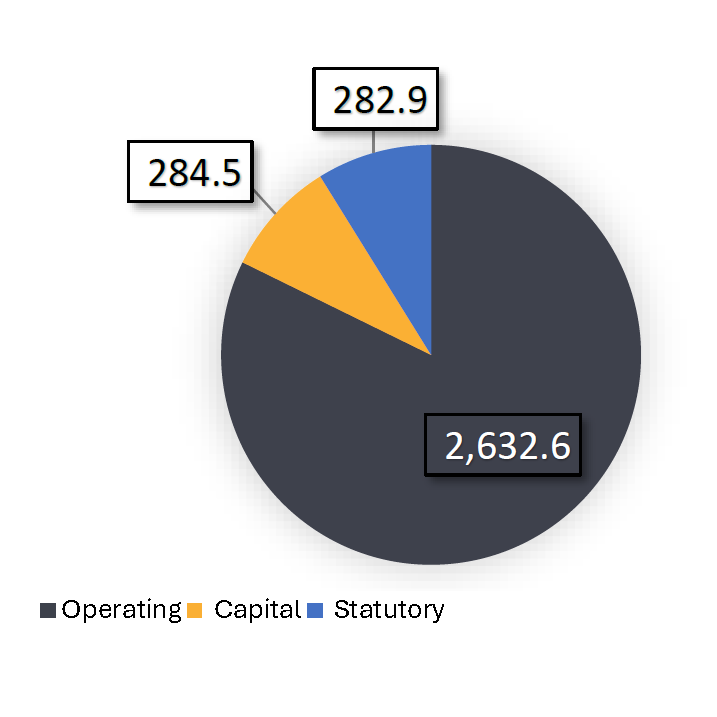
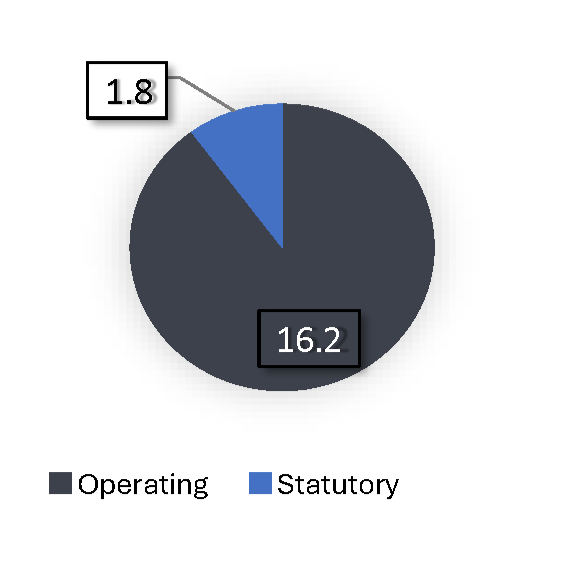
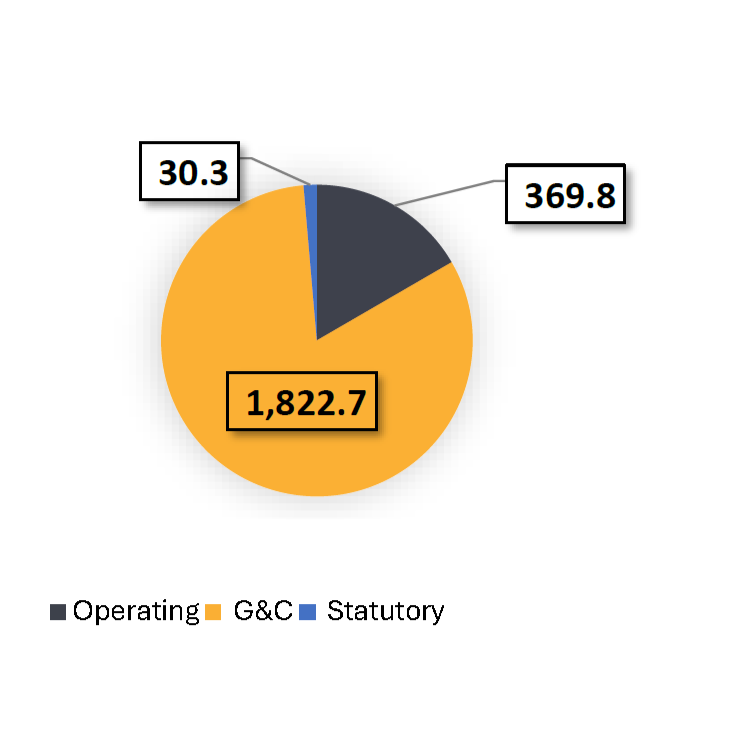
Vote 1 – Operating Expenditures 367.5 2.3 2.3 369.8
Vote 5 – Grants and Contributions 1,821.2 1.6 1.6 1,822.7
Total Voted 2,1887.7 3.8 3.8 2,192.5
Total Statutory 29.9 0.4 0.4 30.3
Total Budgetary Expenditures 2,218.6 4.2 4.2 2,222.8
Totals throughout may not add up due to rounding.

Funding requested through the Supplementary Estimates (C)

  • The 2025-26 Final Supplementary Estimates "C" net total amount for Public Safety Canada (PS) is $4.2M or 0.2% increase of authorities to date.
    • $2.2M in Vote 1 – Operating expenditures;
    • $1.6M in Vote 5 – Grants and contributions; and
    • $0.4M in Statutory authorities related to Employee Benefit Plan adjustments.

Anticipated Questions

Q1 - What are the intended uses of the funding requested for these programs or initiatives requested through the Supplementary Estimates (C)
  • $2.0M (Vote 1) to implement the Foreign Influence Transparency and Accountability Act.
    • This funding will support the implementation of the Foreign Influence Transparency and Accountability Act (FITAA) by establishing the Foreign Influence Transparency Commissioner's Office (FITCO). This initiative aims to strengthen Canada's national security by better protecting its communities and institutions from the threat of foreign interference, while aligning policies and practices more closely with those of key allies.
  • $0.2M (Vote 1) for national security and intelligence review requirements.
    • This funding would allow Public Safety to continue fulfilling its existing responsibilities under the National Security and Intelligence Committee of Parliamentarians (NSICOP) Act, National Security and Intelligence Review Agency (NSIRA) Act, Security of Canada Information Disclosure Act (SCIDA), and Avoiding Complicity in Mistreatment by Foreign Entities Act (ACMFEA) and to remain compliant, responsive, and accountable within the evolving space of national security and intelligence review.
  • $1.6M (Vote 5) to match donations raised by the Canadian Red Cross in response to the 2025 Saskatchewan, Manitoba and Newfoundland and Labrador wildfires.
    • This funding will match donations raised by the Canadian Red Cross (CRC) in response to the 2025 wildfires in Saskatchewan, Manitoba, and Newfoundland and Labrador. The CRC intends to use the federally matched funds to support early and long-term recovery for individuals and households most impacted by the fires in the three provinces.
Royal Canadian Mounted Police (RCMP)
Table 4: RCMP - Portfolio Overview (in millions of dollars)
  Authorities to Date Adjustments SEC Total Proposed Authorities to Date
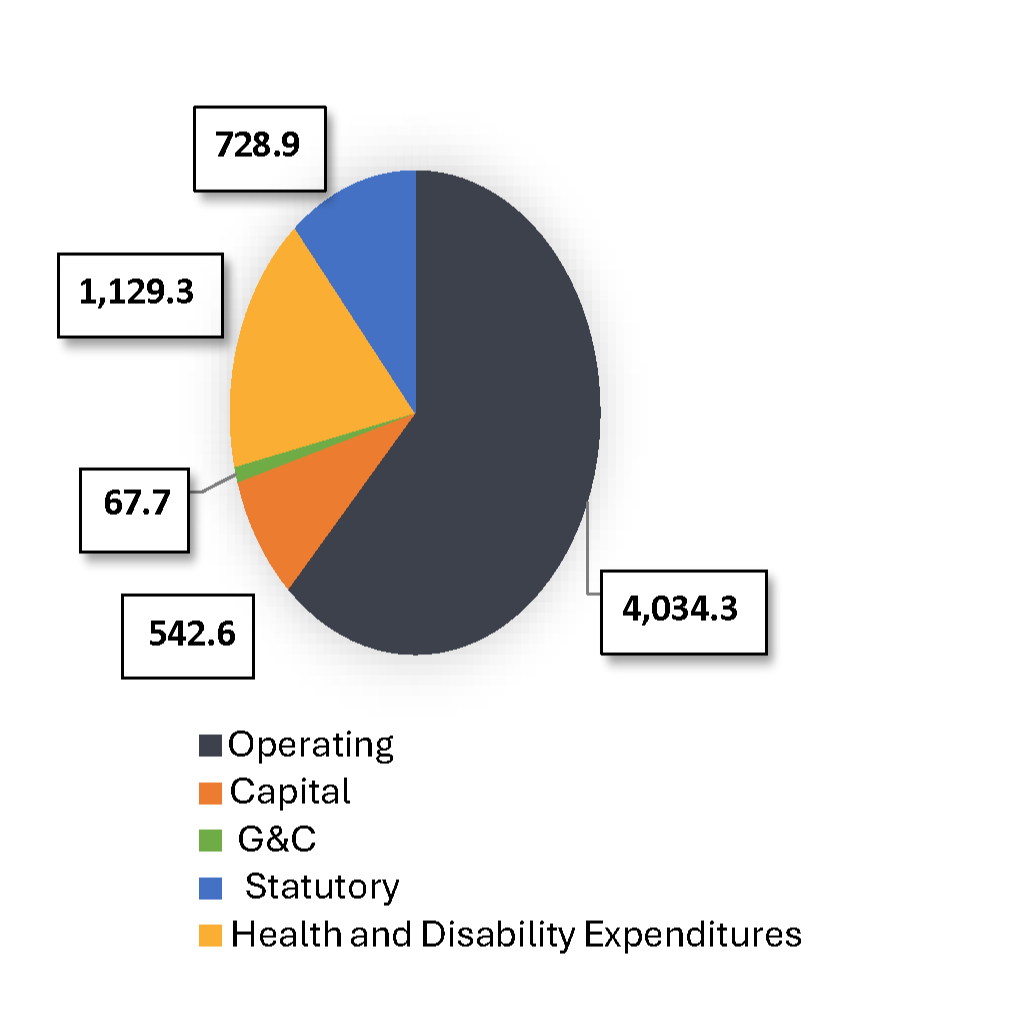
Vote 1 – Operating Expenditures 4,008.9 26.3 25.4 4,034.2
Vote 5 – Grants and Contributions 542.6 - - 542.6
Vote 10 – Grants and Contributions 67.7 - - 67.7
Vote 15 – Health and Disability Expenditures 1,129.2 0.2 0.2 1,129.3
Total Voted 5,748.3 (0.9) 25.6 5,773.9
Total Statutory 725.0 3.9 3.9 729.9
Total Budgetary Expenditures 6,473.3 30.4 29.5 6,502.8
Totals throughout may not add up due to rounding.

Anticipated Questions

Q1 - Given that $16.8M ($19.7M with Employee Benefits Plan) of the increase in RCMP's authorities is for expanding support and capacity within the Federal Policing program, can the Minister explain what specific capability gaps this funding addresses
  • Funding will sustain resource-intensive investigations into serious and organized crime and financial crime. This includes transnational organized crime and domestic drug production, which require specialized investigative techniques such as surveillance, covert operations, and witness protection.
  • Funding will also maintain the RCMP's Clandestine Laboratory Enforcement and Response teams, which dismantle and safely dispose of precursor chemicals and equipment used in synthetic drug production.
Q2 - The Estimates include $6.0M ($6.1M with Employee Benefits Plan) in funding for Drug Impaired Driving initiatives. Can the Minister clarify how this funding will enhance national enforcement capacity and whether the RCMP has seen measurable results from previous phases of this initiative
  • The RCMP is seeking $6.1M in 2025–26 to continue national efforts to combat drug-impaired driving. This funding supports the RCMP's role as Canada's national coordinator for the Drug Recognition Expert Program, ensuring police agencies across the country maintain the capacity to detect and address drug-impaired driving.
  • Funding will allow the RCMP to continue to:
    • Coordinate and deliver the Drug Recognition Expert Program, which trains and certifies all Canadian police services for the Standard Field Sobriety Test.
    • Implement Justice Canada's regulatory amendment adding the Finger-to-Nose test to Standard Field Sobriety Test requirements and facilitate a national rollout of a new training curriculum.
    • Provide national research, equipment procurement, course manuals, and expert guidance to police agencies and Justice Canada.
    • Combatting drug-impaired driving remains a priority under the Canada Road Safety Strategy 2035. Without sustained funding, Drug Recognition Expert capacity across Canada would decline, as many police services cannot independently fund training and certification.
  • Our work is showing results. Since 2017, there has been a 232% increase in Drug Recognition Expert evaluations. This demonstrates a significantly improved capacity to assess drug impaired drivers. Without enough trained Drug Recognition Experts, officers cannot lawfully compel bodily samples needed to prove drug impairment, and both charges and sanctions would decline.
Q3 - The RCMP is seeking $3.7M ($4.6M with Employee Benefits Plan) in funding for national security and intelligence review (NSIR) requirements. Can the Minister outline how this funding will strengthen transparency, accountability, and legislative compliance, and what risks would arise if this funding were not approved
  • This request supports the continuation of functions critical to maintaining transparency, accountability, and legislative compliance.
  • Without access to this funding, the departments and agencies involved would face significant challenges in meeting their obligations under
    • the National Security and Intelligence Committee of Parliamentarians Act,
    • the National Security and Intelligence Review Agency Act,
    • the Security of Canada Information Disclosure Act, and
    • the Avoiding Complicity in Mistreatment by Foreign Entities Act.
  • and would run the institutional risk of failing to comply with statutory requirements and eroding public trust and the integrity of Canada's national security framework.
Canada Border Services Agency (CBSA)
Table 5: CBSA - Portfolio Overview (in millions of dollars)
  Authorities to Date Adjustments SEC Total Proposed Authorities to Date
Vote 1 – Operating Expenditures 2,648.6 13.1 (16.0) 2,632.6
Vote 5 – Grants and Contributions 253.1 0.5 31.5 284.5
Total Voted 2,901.7 13.6 15.5 2,917.1
Total Statutory 281.2 1.7 1.7 282.9
Total Budgetary Expenditures 3,182.9 15.3 17.2 3,200.1
Amounts are rounded; consequently, component figures may not sum exactly to the totals.

Anticipated Questions

Q1 - Which new Canada Border Services Agency (CBSA) programs will receive funding through the 2025-2026 Supplementary Estimates (C)

The CBSA will receive funding for 2 new programs:

  • The CBSA will receive $3.1 million in 2025-2026 to Strengthen Canada's Borders.
    • Budget 2025 approved $669 million for the CBSA over five years, starting in 2025-2026, and $198.3 million ongoing, to increase the Agency's capacity to detect and intercept illicit goods at the border. Funding will support:
      • Recruitment, training and deployment of 1,000 new CBSA officers, as well as an increased stipend for all Border Services Officer Trainees.
      • Investment in infrastructure, including renovations to the CBSA College, two new container examination facilities, and upgrades to Information Technology (IT) systems.
  • The CBSA will receive $4 million in 2025-2026 for the Establishment of the Public Complaints and Review Commission (Horizontal Item).
    • The Public Complaints and Review Commission Act will create an independent body to investigate complaints against the CBSA and the Royal Canadian Mounted Police (RCMP).
    • The funding will enable the CBSA to create a dedicated team to conduct investigations and provide timely responses to the Commission's findings and recommendations.
Q2 - Which existing (or renewed) CBSA programs will receive additional funding through the 2025-2026 Supplementary Estimates (C)

The CBSA will receive funding for four time-limited investment initiatives:

  • $3.2 million in 2025-2026 for Immigration Measures for Palestinian and Ukrainian Temporary Residents
    • The CBSA has been working with Immigration, Refugees and Citizenship Canada (IRCC) to support Canada's assisted departure efforts in response to the crises in Gaza and Ukraine.
  • 1.4 million in 2025-2026 for National Security and Intelligence Review Requirements (Horizontal Item)
    • The CBSA will receive funding to fulfill its responsibilities under several national security Acts. This will allow the CBSA to remain compliant, responsive, and accountable within the evolving space of national security and intelligence reviews.
  • $1.4 million in 2025-2026 for Emergency Responses to Crises Overseas
    • As part of government-wide emergency responses to international crises, the CBSA works with other government departments, as well as regional and international organizations, to support response operations and contingency planning in the Middle East and assisted departures from Haiti.
  • $600,000 in 2025-2026 for Drug-Impaired Driving Initiatives (Horizontal Item)
    • The RCMP and the CBSA will receive funding for 2025-2026 to support an existing horizontal initiative: Building Law Enforcement Capacity to Address Drug-Impaired Driving.
Q3 - What proportion of the Canada Border Services Agency's funding in the 2025-2026 Supplementary Estimates (C) is allocated to salaries versus non-salary funding
  • The CBSA will receive funding in the 2025-2026 Supplementary Estimates (C) as follows:
    • $10.2 million in salaries (66.2% of total funding)
    • $5.2 million in non-salaries (33.8% of total funding)
      • Most of the non-salary funding will be used for transportation or acquisition of materials and supplies.

The tables below provides the funding details by initiative:

Table 6: Initiatives Receiving Funding for New Programs (CBSA)
CBSA's Investment Funding (in millions of dollars) 2025-2026 Supplementary Estimates (C)
Salary Non-Salary Total
A) Funding to Strengthen Canada's Borders 1.8 1.3 3.1
B) Funding for the Establishment of the Public Complaints and Review Commission (Horizontal Item) 3.1 0.9 4.0
Subtotal 4.9 2.2 7.1

Totals may not add up due to rounding.
Investment funding excludes PWGSC accommodation premium and SSC core IT services costs.

Table 7: Time Limited Initiatives (CBSA)
CBSA's Investment Funding (in millions of dollars) Salary Non-Salary Total
A) Funding for Immigration Measures for Palestinian and Ukrainian Temporary Residents 2.7 0.5 3.2
B) Funding for National Security and Intelligence Review Requirements (Horizontal Item) 1.1 0.3 1.4
C) Funding for Emergency Responses to Crises Overseas 1.2 0.2 1.4
D) Funding for Drug-Impaired Driving Initiatives (Horizontal Item) 0.4 0.2 0.6
Subtotal 5.3 1.2 6.5
Table 8: Transfers from Other Government Departments (CBSA)
CBSA's Investment Funding (in millions of dollars) Salary Non-Salary Total
A) From the Royal Canadian Mounted Police for the Canadian Firearms Program 0.0 1.7 1.7
B) From the Department of Foreign Affairs, Trade and Development to adjust funding previously provided for departmental staff located at missions abroad 0.0 0.1 0.1
Subtotal 0.0 1.8 1.8

Totals may not add up due to rounding.
Investment funding excludes PWGSC accommodation premium and SSC core IT services costs.

Table 9: Total Voted Budgetary Funding (CBSA)
CBSA's Investment Funding (in millions of dollars) Salary Non-Salary Total
Salary and Non-Salary as a Percentage of Total Voted Budgetary Funding 66.2% 33.8% 100.0%
Statutory - Employee Benefit Plans (EBP) 1.7 0.0 1.7
Grand Total 11.9 5.2 17.2

Totals may not add up due to rounding.
Investment funding excludes PWGSC accommodation premium and SSC core IT services costs.

Canadian Security Intelligence Service (CSIS)
Table 10: CSIS - Portfolio Overview (in millions of dollars)
  Authorities to Date Transfers Adjustments SEC Total Proposed Authorities to Date Change (%)
Vote 1 – Operating Expenditures 940.9 - 7.3 7.3 948.2 0.8%
Total Voted 940.9 - 7.3 7.3 948.2 0.8%
Total Statutory 72.2 - 1.8 1.8 74.0 2.5%
Total Budgetary Expenditures 1,013.1 - 9.2 9.2 1,022.3 0.9%
Amounts are rounded; consequently, component figures may not sum exactly to the totals.

Anticipated Questions

Q1 - How does CSIS protect Canada's sovereignty, especially given the current geopolitical context
  • CSIS is mandated to investigate activities suspected of constituting threats to the security of Canada to report to, and advise the Government of Canada, and in specific circumstances, to take measures to reduce these threats.
  • These threats are defined in the CSIS Act as espionage and sabotage, foreign interference activities, terrorism, and subversion.
  • CSIS provides, for example, advice, intelligence products, resources to support the public, and other support as it relates to the CSIS mandate.
  • CSIS takes threats to the security of Canada very seriously, and continues to prioritize its resources as required.
  • CSIS works closely with Canadian entities and national security partners so they are aware of the threat environment and have the information they need to make informed decisions and implement pre-emptive security measures.
  • CSIS disseminates intelligence products to Government of Canada partners to increase whole-of-government understanding of threats targeting Canada.
Q2 - Does CSIS have the tools it needs to perform its duties and functions, and ensure the safety and security of Canada and all Canadians
  • CSIS operates in a world where the threat landscape is always evolving. The tools CSIS uses must also evolve and adapt, both in their scope and scale.
  • The threats we face are increasing and are evolving. CSIS therefore takes a rigorous approach to prioritizing its resources, tools, and efforts to best effect.
  • The government also continuously evaluates CSIS' capabilities and posture, to ensure that we take any measures needed to keep our national security toolkit up to date and best-placed to keep Canadians safe, secure, and prosperous.
Correctional Service of Canada (CSC)
Table 11: CSC - Portfolio Overview (in millions of dollars)
  Authorities to Date Adjustments SEC Total Proposed Authorities to Date
Vote 1 – Operating expenditures, grants and contributions 3,460.7 139.4 139.4 3,600.1
Vote 5 – Capital expenditures 377.3 - - 377.3
Vote 10 – CORCAN revolving fund - - - -
Total Voted 3,838.0 139.4 139.4 3,977.4
Total Statutory 298.2 14.4 14.4 312.6
Total Budgetary Expenditures 4,136.1 153.8 153.8 4,289.9
Totals throughout may not add up due to rounding.

Anticipated Questions

Q1 - Funding for operating requirements 2025 to 2026
  • The Correctional Service of Canada (CSC) has sought funding for 2025 to 2026 to sustain its operations.
  • Of the funding to be authorized through the 2025 to 2026 Supplementary Estimates "C", $138.8M represents an increase in CSC's voted operating authorities.
  • This funding will be used to address CSC's key operating pressures, due to increasing security risks, evolving offender profiles, aging infrastructure, and the need to adapt to emerging technologies and environmental challenges.
  • The funding being sought through these Estimates will enable CSC to deliver on its public safety mandate and legislated requirements.
Civilian Review and Complaints Commission for the RCMP (CRCC)
Table 12: CRCC - Portfolio Overview (in millions of dollars)
  Authorities to Date Adjustments SEC Total Proposed Authorities to Date
Vote 1 – Program Expenditures 15.9 0.3 0.3 16.2
Total Voted 15.9 0.3 0.3 16.2
Total Statutory 1.7 0.1 0.1 1.8
Total Budgetary Expenditures 17.6 0.4 0.4 18.1
Totals throughout may not add up due to rounding.

Anticipated Questions

Q1 - What is included in these Supplementary Estimates for the CRCC
  • The CRCC received Treasury Board authority to increase its 2025-2026 appropriations by $0.4M, or 2% of authorities to date, in Supplementary estimates C
  • This funding includes voted appropriations of $0.3M and statutory appropriations of $0.1M
  • This funding will support the establishment of the PCRC, as the external review body for the Royal Canadian Mounted Police (RCMP) and the Canada Border Services Agency (CBSA). Building on the existing Civilian Review and Complaints Commission (CRCC) for the RCMP, the PCRC would fill a critical gap in providing an independent review body for the CBSA, as well as enhancing the current complaints and review process for the RCMP
Q2 - What is the funding for future fiscal years
  • Fiscal year 2026-2027 voted appropriations of $11.1M and statutory of $1.8M
  • Fiscal year 2027-2028 and ongoing voted appropriations of $10.9M and statutory of $2.2M
Q3 - Were there any conditions associated with the approval of the Treasury Board submission
  • The following Vote 1 authorities are temporarily frozen until a leadership structure is in place with the authority to proceed with the expanded mandate, i.e., a Chairperson is appointed
    • Fiscal year 2025-2026 amount $0.3M
    • Fiscal year 2026-2027 amount $9.9M
    • Fiscal year 2027-2028 and ongoing amount $10.2M

Background

Additional Background Information on Supps C by Portfolio Organization

Public Safety Canada (PS)

The 2025-26 Supplementary Estimates "C" net total amount for PS is $4.2M, or 0.2% of authorities to date.

Table 13: PS - Proposed Authorities to Date including Supplementary Estimates "C" for 2025-26 (in millions of dollars)
  Authorities to Date Transfers Adjustments SEC Total Proposed Authorities to Date Change (%)
Vote 1 – Operating Expenditures 367.5 - 2.3 2.3 369.8 0.6%
Vote 5 – Grants and Contributions 1,821.2 - 1.6 1.6 1,822.7 0.1%
Total Voted 2,1887.7 - 3.8 3.8 2,192.5 0.2%
Total Statutory 29.9 - 0.4 0.4 30.3 1.4%
Total Budgetary Expenditures 2,218.6 - 4.2 4.2 2,222.8 0.2%
Totals throughout may not add up due to rounding.
PS - Proposed Authorities to Date

The pie chart shows the proposed authorities to date breakdown by vote for Public Safety Canada and they are illustrated with the following amounts:

  • Operating expenditures represents a total of $369.8M
  • Grants and contributions represents a total of $1,822.7M, and
  • Statutory expenditures represents a total of $30.3M.
The pie chart shows the proposed authorities to date breakdown by vote for Public Safety Canada
PS - Program Statutory
1.1 Voted Appropriations

PS is anticipating to receive Treasury Board authority to increase its voted appropriations by $3.8M for the following items:

  • $2.0M in Vote 1 – Operating Expenditures funding to implement the Foreign Influence Transparency and Accountability Act (Fall Economic Statement 2024)
  • $1.6M in Vote 5 – Grants and Contributions funding to match donations raised by the Canadian Red Cross in response to the 2025 Saskatchewan, Manitoba and Newfoundland and Labrador wildfires (2025 Off-Cycle Decision) (Pending), and
  • $0.3M in Vote 1 – Operating Expenditures funding for national security and intelligence review requirements (2025 Off-Cycle Decision) (Pending).
1.2 Statutory Appropriations

Statutory appropriations related to the Employee Benefit Plan is $0.4M for PS.

1.3 Funds Available (Within Existing Votes)

PS currently has $133.5M permanently frozen funding within its reference levels for the Assault-Style Firearms Compensation Program (ASFCP). This amount reflects a reprofile of $158.9M from 2025-26 to 2026-27 and 2027-28 which has received approval from the Department of Finance and offset by an approved reprofile from 2024-25 to 2025-26 of $25.4M.

Canada Border Services Agency (CBSA)

The 2025-26 Supplementary Estimates "C" net total amount for the CBSA is $17.2M or 0.5% of authorities to date.

Table 14: CBSA - Proposed Authorities to Date including Supplementary Estimates "C" for 2025-26 (in millions of dollars)
  Authorities to Date Transfers Adjustments SEC Total Proposed Authorities to Date Change (%)
Vote 1 – Operating Expenditures 2,648.6 (29.1) 13.1 (16.0) 2,632.6 -0.6%
Vote 5 – Capital expenditures 253.1 31.0 0.5 31.5 284.5 12.4%
Total Voted 2,901.7 1.8 13.6 15.5 2,917.1 0.5%
Total Statutory 281.2 - 1.7 1.7 282.9 0.6%
Total Budgetary Expenditures 3,182.9 1.8 15.3 17.2 3,200.1 0.5%
Totals throughout may not add up due to rounding.
CBSA - Proposed Authorities to Date

The pie chart shows the proposed authorities to date breakdown by vote for Canada Border Services Agency and they are illustrated with the following amounts:

  • Operating expenditures represents a total of $2,632.6M
  • Capital expenditures represents a total of $284.5M, and
  • Statutory expenditures represents a total of $282.9M.
The pie chart shows the proposed authorities to date breakdown by vote for Canada Border Services Agency
CBSA - Program Statutory
2.1 Voted Appropriations

The CBSA has received Treasury Board Authority to increase its voted appropriations by $13.6M for the following items:

  • $4.0M in funding for the establishment of the Public Complaints and Review Commission
  • $3.1M in funding for the ongoing immigration measures for Palestinian and Ukrainian temporary residents
  • $3.1M in funding to reinforce Canada's borders (Pending)
  • $1.4M in funding for the ongoing emergency responses to crises overseas
  • $1.4M in funding to meet national security and intelligence review requirements (Pending), and
  • $0.6M in funding for the drug-impaired driving Initiatives (Pending).
2.2 Statutory Appropriations

The CBSA anticipates receiving Treasury Board authority to increase its statutory appropriations related to the Employee Benefit Plan by $1.7M.

2.3 Transfers (From/To Other Government Departments)

The CBSA will receive $1.8M in its appropriations from other federal government organizations.

  • $1.7M from the Royal Canadian Mounted Police for the Canadian Firearms Program
  • $0.1M from the Department of Foreign Affairs, Trade and Development to adjust funding previously provided for the departmental staff located at missions abroad
2.4 Internal Transfers (Between Votes)
  • CBSA has an internal reallocation of resources from Vote 1 – Operating Expenditures ($25.0M) to Vote 5 – Capital Expenditures to implement the priorities established as part of the investment plan
  • CBSA has an internal reallocation of resources from Vote 1 – Operating Expenditures ($6.0M) to Vote 5 – Capital Expenditures for the Traveller Modernization initiative
  • CBSA will increase their Vote Netted Revenue by $3.0M

Canadian Security Intelligence Service (CSIS)

The 2025-26 Supplementary Estimates "C" net total amount for the Canadian Security Intelligence Service is $9.2M or 0.9% of authorities to date.

Table 15: CSIS - Proposed Authorities to Date including Supplementary Estimates "C" for 2025-26 (in millions of dollars)
  Authorities to Date Transfers Adjustments SEC Total Proposed Authorities to Date Change (%)
Vote 1 – Program expenditures 940.9 - 7.3 7.3 948.2 0.8%
Total Voted 940.9 - 7.3 7.3 948.2 0.8%
Total Statutory 72.2 - 1.8 1.8 74.0 2.5%
Total Budgetary Expenditures 1,013.1 - 9.2 9.2 1,022.3 0.9%
Totals throughout may not add up due to rounding.
CSIS - Proposed Authorities to Date

The pie chart shows the proposed authorities to date breakdown by vote for the Canadian Security Intelligence Service and they are illustrated with the following amounts:

  • Program expenditures represents a total of $948.2M, and
  • Statutory expenditures represents a total of $74.0M.
The pie chart shows the proposed authorities to date breakdown by vote for the Canadian Security Intelligence Service
CSIS - Program Statutory
3.1 Voted Appropriations

The Canadian Security Intelligence Service has received Treasury Board authority to increase its voted appropriations by $7.3M for the following items:

  • $5.4M in funding for network services, and
  • $1.9M in funding for national security and intelligence review requirements.
3.2 Statutory Appropriations

The Canadian Security Intelligence Service has received Treasury Board authority to increase its statutory appropriations related to the Employee Benefit Plan by $1.8M.

Correctional Service of Canada (CSC)

The 2025-26 Fall Supplementary Estimates "C" net total amount for the Correctional Service of Canada is $153.8M or 3.7% of authorities to date.

Table 16: CSC - Proposed Authorities to Date including Supplementary Estimates "C" for 2025-26 (in millions of dollars)
  Authorities to Date Transfers Adjustments SEC Total Proposed Authorities to Date Change (%)
Vote 1 – Operating expenditures, grants and contributions 3,460.7 - 139.4 139.4 3,600.1 4.1%
Vote 5 – Capital expenditures 377.3 - - - 377.3 0.0%
Vote 10 – CORCAN revolving fund - - - - - 0.0%
Total Voted 3,838.0 - 139.4 139.4 3,977.4 3.6%
Total Statutory 298.2 - 14.4 14.4 312.6 4.8%
Total Budgetary Expenditures 4,136.1 - 153.8 153.8 4,289.9 3.7%
Totals throughout may not add up due to rounding.
CSC - Proposed Authorities to Date

The pie chart shows the proposed authorities to date breakdown by vote for the Correctional Service Canada and they are illustrated with the following amounts:

  • Operating expenditures, grants and contributions represents a total of $3,600.1M
  • Capital expenditures represents a total of $377.3M, and
  • Statutory expenditures represents a total of $312.6M.
The pie chart shows the proposed authorities to date breakdown by vote for the Correctional Service Canada
CSC - Program Statutory
4.1 Voted Appropriations

The Correctional Service of Canada has received Treasury Board authority to increase its voted appropriations by $139.4M for the following item:

  • $139.4M in funding for operating requirements 2025-26 (Pending)
4.2 Statutory Appropriations

The Correctional Service of Canada Statutory funding related to the Employee Benefit Plan is $14.4M.

Royal Canadian Mounted Police (RCMP)

The 2025-26 Supplementary Estimates "C" net total amount for the RCMP is $29.5M or 0.5% of authorities to date.

Table 17: RCMP - Proposed Authorities to Date including Supplementary Estimates "C" for 2025-26 (in millions of dollars)
  Authorities to Date Transfers Adjustments SEC Total Proposed Authorities to Date Change (%)
Vote 1 – Operating expenditures 4,008.9 (0.9) 26.3 25.4 4,034.2 0.6%
Vote 5 – Capital expenditures 542.6 - - - 542.6 0.0%
Vote 10 – Grants and Contributions 67.7 - - - 67.7 0.0%
Vote 15 – Health and Disability Expenditures 1,129.2 - 0.2 0.2 1,129.3 0.0%
Total Voted 5,748.3 - (0.9) 25.6 5,773.9 0.4%
Total Statutory 725.0 - 3.9 3.9 729.9 0.5%
Total Budgetary Expenditures 6,473.3 (0.9) 30.4 29.5 6,502.8 0.5%
Totals throughout may not add up due to rounding.
RCMP - Proposed Authorities to Date

The pie chart shows the proposed authorities to date breakdown by vote for the Royal Canadian Mounted Police and they are illustrated with the following amounts:

  • Operating expenditures represents a total of $4,034.3M
  • Capital expenditures represents a total of $542.6M
  • Grants and contributions represents a total of $67.7M
  • Health and disability expenditures represents a total of $1,129.3M, and
  • Statutory expenditures represents a total of $728.9M.
The pie chart shows the proposed authorities to date breakdown by vote for the Royal Canadian Mounted Police
RCMP - Program Statutory
5.1 Voted Appropriations

The RCMP has received Treasury Board Authority to increase its voted appropriations by $26.5M for the following items:

  • $16.8M in Vote 1 – Operating Expenditures ($16.6M) and Vote 15 – Health and Disability Expenditures ($0.1M) funding in support of 1,000 new Federal Policing resources (Pending)
  • $6.0M in Vote 1 – Operating Expenditures ($6.0M) and Vote 15 – Health and Disability Expenditures ($5.1K) funding for the drug-impaired driving Initiatives (Pending), and
  • $3.7M in Vote 1 – Operating Expenditures ($3.7M) and Vote 15 – Health and Disability Expenditures ($21.7K) funding for resourcing departments and agencies to meet national security and intelligence requirements (Pending)
5.2 Statutory Appropriations

The RCMP anticipates receiving $3.9M of statutory appropriations related to the EBP for all employee categories.

  • $2.2M for pensions and other employee benefits – Members of the Force
  • $1.7M for contributions to employee benefit plans
5.3 Transfers (From/To Other Government Departments)

The RCMP has entered into transfer agreements totaling ($0.9M) from/to other federal government organizations.

  • ($1.7M) in Vote 1 – Operating Expenditures to Canada Border Services Agency to administer the import requirements of the Firearms Act
  • $0.8M in Vote 1 – Operating Expenditures from the Department of Foreign Affairs, Trade and Development to support departmental staff located at missions abroad
5.4 Funds Available (Within Existing Votes)

The RCMP currently has $41.2K permanently frozen funding within its reference levels to support the Communications Community Office at the Treasury Board of Canada Secretariat (TBS).

Civilian Review and Complaints Commission for the Royal Canadian Mounted Police (CRCC)

Table 18: CRCC - Proposed Authorities to Date including Supplementary Estimates "C" for 2025-26 (in millions of dollars)
  Authorities to Date Transfers Adjustments SEC Total Proposed Authorities to Date Change (%)
Vote 1 – Program Expenditures 15.9 - 0.3 0.3 16.2 2.2%
Total Voted 15.9 - 0.3 0.3 16.2 2.2%
Total Statutory 1.7 - 0.1 0.1 1.8 5.4%
Total Budgetary Expenditures 17.6 - 0.4 0.4 18.1 2.5%
Totals throughout may not add up due to rounding.
CRCC - Proposed Authorities to Date

The pie chart shows the proposed authorities to date breakdown by vote for the Civilian Review and Complaints Commission for the RCMP and they are illustrated with the following amounts:

  • Program expenditures represents a total of $16.2M, and
  • Statutory expenditures represents a total of $1.8M
The pie chart shows the proposed authorities to date breakdown by vote for the Civilian Review and Complaints Commission
CRCC - Program Statutory
6.1 Voted Appropriations

The Civilian Review and Complaints Commission for the RCMP has received Treasury Board authority to increase its voted appropriations by $0.3M. This amount will be frozen temporarily until condition is satisfied.

  • $0.3M in funding for the establishment of the Public Complaints and Review Commission
6.2 Statutory Appropriations

The CRCC has received Treasury Board authority to increase its statutory appropriations by $0.1M.

Harm Reduction Measures – Cheat Sheet

Firearms Specific Harm Reduction Measures

"Red" Flag Laws temporary removal of firearm (up to 30 days)
  • Anyone may apply for an emergency prohibition order
  • Application is ex parte; hearing will not include the person who could be subject to the order
  • Judge may issue order if they believe the individual poses a safety risk to self or others
  • Weapon(s) removed for up to 30 days; seized by police or turned in by owner
  • Does not result in criminal record, except in event of a breach of order and conviction for that offence
  • Resources online; Red Flag Awareness Initiative, $3.7M to 23 organizations across Canada announced November 2025
  • In effect as of December 2023
"Yellow" Flag Laws temporary licence suspension (up to 30 days)
  • If CFO has reasonable grounds to suspect a person is no longer eligible to hold a firearms licence, must suspend the individual's licence
  • Suspension lasts up to 30 days
  • Example: suspected of illegally reselling firearms
  • Licence holder keeps their firearm(s) during suspension
  • May not use, acquire or import firearms during suspension
  • If the licence holder does not follow restrictions, licence can be revoked; potential criminal liability
  • In effect as of March 2025
Mandatory Licence Ineligibility and Revocation (removes access to firearm)
  • Licence Refusal: Firearms licence may not be issued to anyone convicted of an offence involving violence against an intimate partner or family member (threat, use or attempt) on or after April 4, 2025
  • Licence Revocation: A firearms licence must be revoked if CFO has reasonable grounds to suspect the licence holder may have engaged in domestic violence or stalking
  • All firearms must be delivered to a peace officer
  • Working to finalize Protection Order regulations this spring.
  • Once Protection Order regulations finalized, anyone subject to a protection order will be ineligible for a licence (refused or revoked)
  • Working to address feedback such as inclusion of peace bonds.
  • Engagement ongoing to support operational readiness
  • In effect as of April 2025

Bill C-22 – Key Messages

General for Bill C-22

  • In an increasingly digital world, Canada's law enforcement agencies and the Canadian Security Intelligence Service (CSIS) need modern tools to help keep Canadians and those in Canada safe.
  • Clear, updated laws are essential to support effective investigations into serious crimes and national security threats, while respecting Canadians' rights.
  • New technology makes communication and electronic exchange faster and more accessible, but they can also be misused. Criminals, extremists and other threat actors take advantage of this digital environment and use online platforms for criminal activities like online sexual abuse, online fraud, extortion, human trafficking and money laundering.
  • It's also a place where threats to Canada can be planned, coordinated and financed, such as terrorist or violent extremism attacks, or foreign interference activities.
  • It is crucial that our laws are able to keep pace with this rapidly evolving technological environment. This Bill would help to ensure that law enforcement agencies and CSIS have the right tools to effectively investigate threats.

In particular, the Bill would:

  • Create new tools to help law enforcement agencies and CSIS in the early stages of an investigation to:
    • identify a victim or suspect quicker
    • identify service providers who hold information relevant to an investigation more quickly, a preliminary step to obtaining a production order or warrant
  • Clarify that law enforcement agencies and CSIS can receive tips, ask for information to be provided voluntarily or use information that is publicly available to investigate crime and threats to the security of Canada. It would also clarify that these situations do not require a warrant.
  • Make sure that law enforcement agencies and CSIS can quickly obtain information in emergency situations, while setting parameters to ensure that people's Charter rights and privacy are protected
  • Streamline the process for Canada's international partners in mutual assistance in criminal matters to obtain basic information (subscriber information and transmission data) from a Canadian court while maintaining the existing strong safeguards of Canada's mutual legal assistance framework including the Charter and other privacy rights.
  • Compel select electronic service providers to have the technical capabilities to allow them to respond to warrants or production orders, from law enforcement agencies and CSIS in criminal and intelligence investigations.

Part 1: Timely Access to Data and Information - Justice Canada

  • Amendments to the Criminal Code and other federal statutes are proposed to provide law enforcement agencies with a modern legal framework and tools they need to investigate crime, respond to national security threats and keep Canadians safe.
  • These changes would:
    • provide new tools to facilitate transnational access to data in a globalized world where crimes cross national borders.
    • update existing tools to keep pace with modern digital challenges in the search of computer systems and data stored on or accessible from those computer systems.
    • respond to evolving case law, including in response to decisions of the Supreme Court of Canada, by providing law enforcement agencies with the ability to obtain timely access to key information needed to pursue investigations into crimes, including serious offences such as murder.
    • clarify the ability of law enforcement agencies to exercise specific powers and seize specific information without a warrant in urgent, time-sensitive circumstances, consistent with existing law.

Part 2: Supporting Authorized Access to Ifnormation Act (SAAIA) – Public Safety Canada

Current Landscape and Gaps
  • Law enforcement agencies and the Canadian Security Intelligence Service (CSIS) operate in an increasingly digital world without a legal framework that requires electronic service providers (ESPs) to develop and maintain lawful access capabilities.
  • Even when investigators have legal authorizations to request and receive information or intercept communications, ESPs may lack the technical capabilities to provide the information in a timely manner, if at all. This gap has resulted in investigative challenges, as most investigations now have an online component due to the rise of mobile and Internet communications.
  • This inability to keep pace with the changing technological environment has also caused Canada to rely frequently on foreign allies for national security tips and leads.
  • As such, we face challenges when trying to collaborate effectively on transnational investigations because we simply do not have the appropriate legislative tools to ensure ESPs are able to provide the relevant domestic information, even with a legal authority, such as a warrant.
  • The proposed Supporting Authorized Access to Information Act (SAAIA) will address these issues and help ensure that CSIS can investigate threats to the security of Canada and that law enforcement agencies can effectively detect, prosecute and respond to crime.
Proposed Framework
  • Specifically, the proposed bill would require select ESPs to have the capability to enable law enforcement agencies and CSIS to effectively access information and data they are legally authorized to access, in order to start or advance criminal and intelligence investigations.
  • Under the proposed bill, there are two ways by which an ESP could be mandated to develop and maintain lawful access capabilities:
    • First, select ESPs such as traditional telecommunications companies would be organized into classes and then as "core providers" based on criteria laid out in the regulations. Each class of designated ESPs would have to abide by specific requirements, which would be tailored to that particular class
    • Second, the Minister of Public Safety could issue a Ministerial Order (MO) compelling the development of specific capabilities.
      • MOs would be based on operational needs, as new technologies develop, and could be issued to both core and non core-providers ESPs (e.g. messaging apps and tech companies).
  • Instead of requiring whole sectors, including small enterprises, to have capabilities in place, the government will be able to take a more targeted approach and require capabilities development, as needed, through MOs.
  • The Minister of Public Safety must seek the approval of the Intelligence Commissioner before issuing a MO.
  • It is important to note that SAAIA, on its own, would not create new authorities, such as surveillance powers, for police and CSIS. Rather, it would ensure that ESPs are able to give effect and act on legal requests such as court orders providing authority for investigative actions by police and CSIS.
  • The Government of Canada is committed to the protection of cybersecurity and privacy rights. SAAIA includes safeguards such that an ESP is not required to comply with provisions in regulations or a Ministerial Order that would introduce systemic vulnerabilities in electronic protections or prevent them from being rectified.
Stakeholder Engagement
  • Between June 2025 and February 2026, the government held information sessions and bilateral and roundtable discussions with stakeholders, including those from civil liberties organizations, privacy advocates, academia and industry, along with provincial and municipal law enforcement agencies.
  • The main concerns raised by stakeholders on SAAIA include:
    • insufficient safeguards for Ministerial Orders, lack of transparency, definition of key terms such as systemic vulnerability and compensation for the development and maintenance of capabilities.
  • We are grateful to our partners and stakeholders who met with us to share their views and proposed changes whether in writing or verbally. We have amended the bill to reflect their input.
Amendments to SAAIA as proposed in Bill C-22

With the new Bill C-22:

  • Ministerial Orders would be subject to approval by the Intelligence Commissioner (IC) and privacy and cybersecurity are explicit factors for consideration.
  • Factors that must be considered for MOs must now also be considered when making regulations.
  • Clarification that data retention requirements can be imposed for metadata, for one year maximum, but not for content, web-browsing history or social media activities.
  • Additional parameters have been added for the inspection powers, the obligation to assist, and the confidentiality and security regulations.
  • Business information provided as part of an internal audit or obtained during an inspection must be kept confidential by designated persons.
  • Subsection 15(g), which been misinterpreted as prohibiting the disclosure of information related to a potential systemic vulnerability, has been removed.
  • Public annual reporting has been included as a legislative requirement.
  • Systemic vulnerability is now defined in the statute.
Oversight and Transparency
  • To ensure robust oversight, the Intelligence Commissioner must review and approve Ministerial Orders before being issued to electronic service providers by the Minister of Public Safety. The IC will provide an essential layer of accountability and transparency by ensuring that the MOs are reasonable.
  • The National Security Intelligence Review Agency will be able to review the IC decisions.
  • To enhance transparency and strengthen accountability, the Minister of Public Safety must publish an annual report on the activities taken under SAAIA during the previous calendar year.
  • We are confident that this proposal brings the right balance between supporting effective investigations and privacy rights.
Date modified: